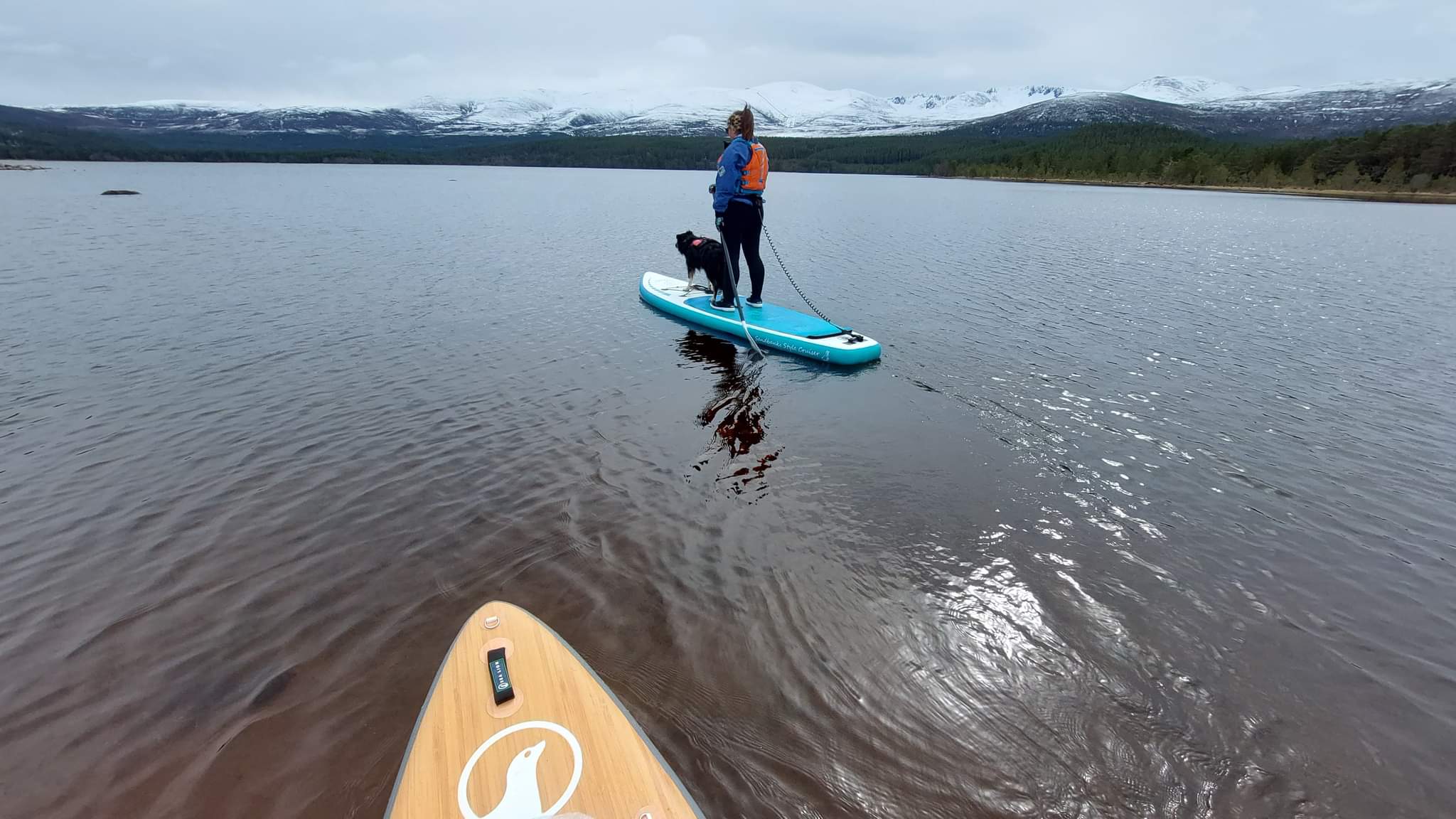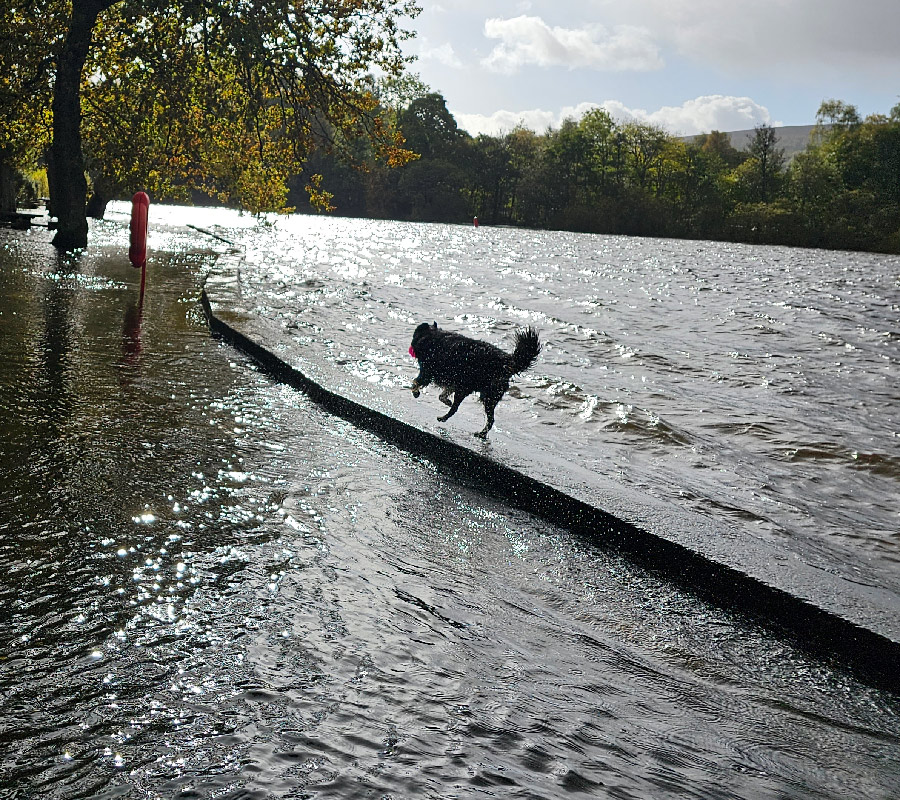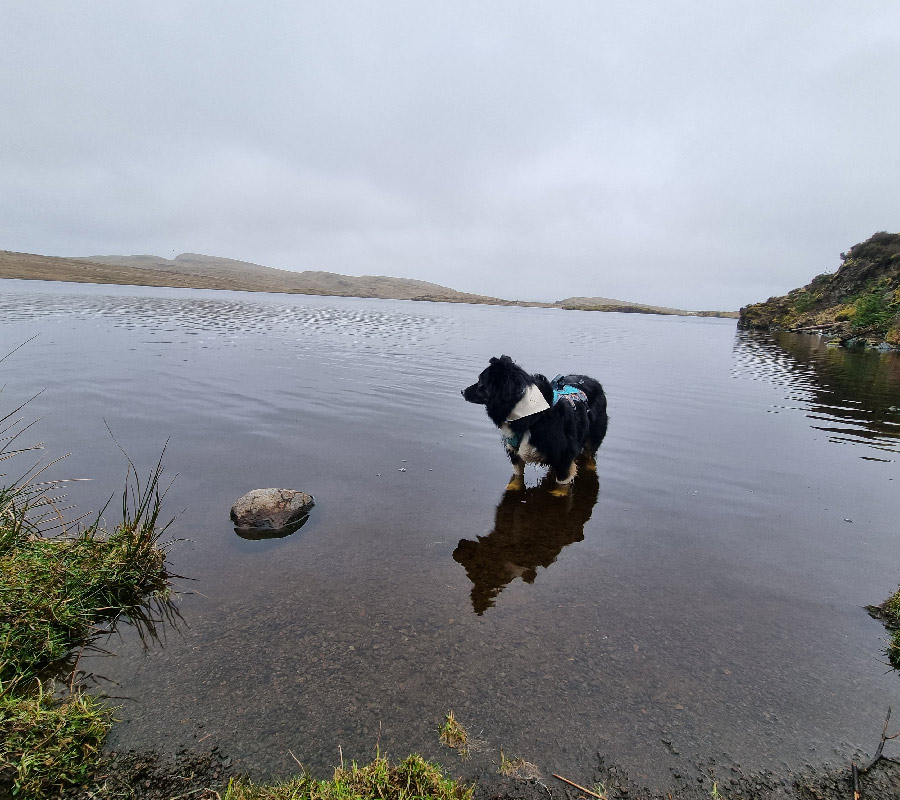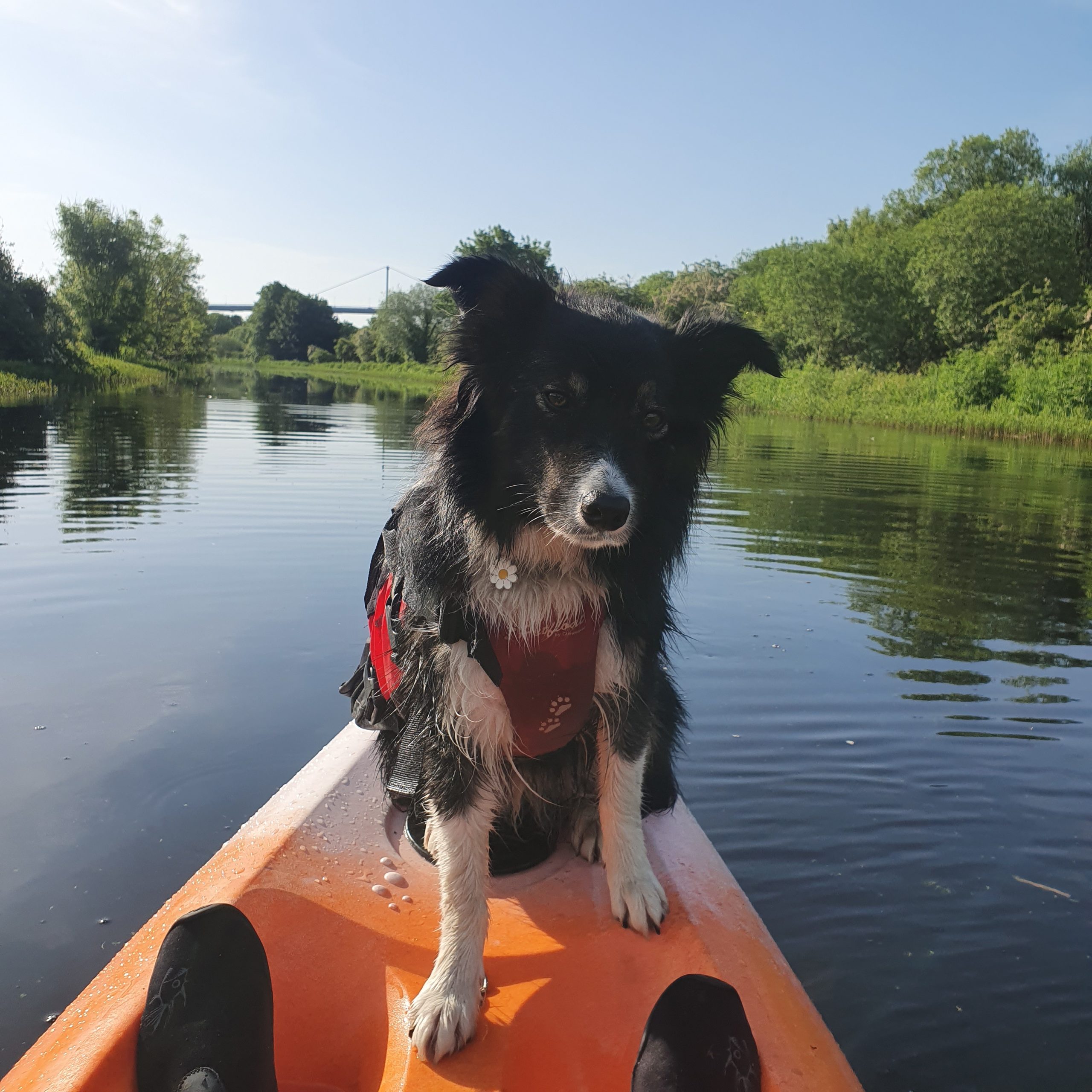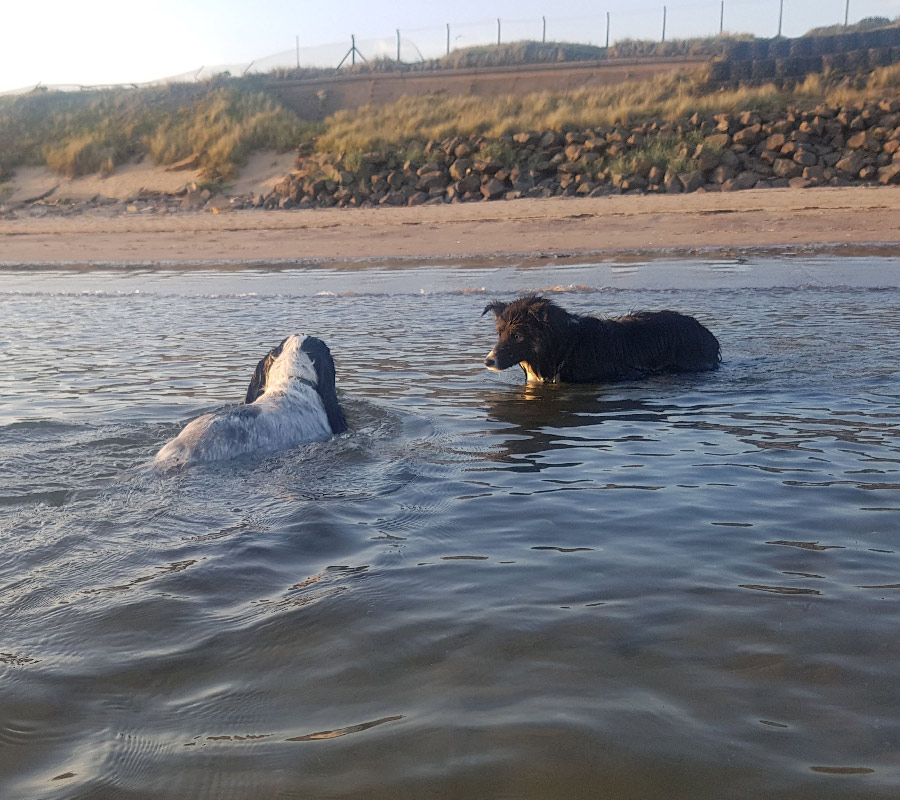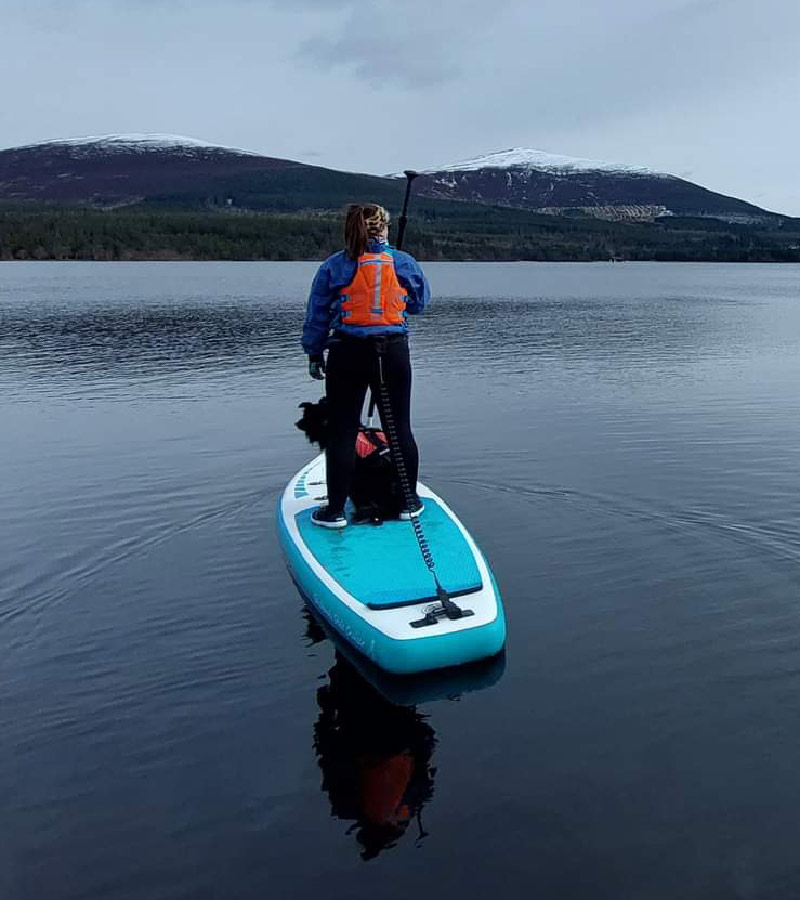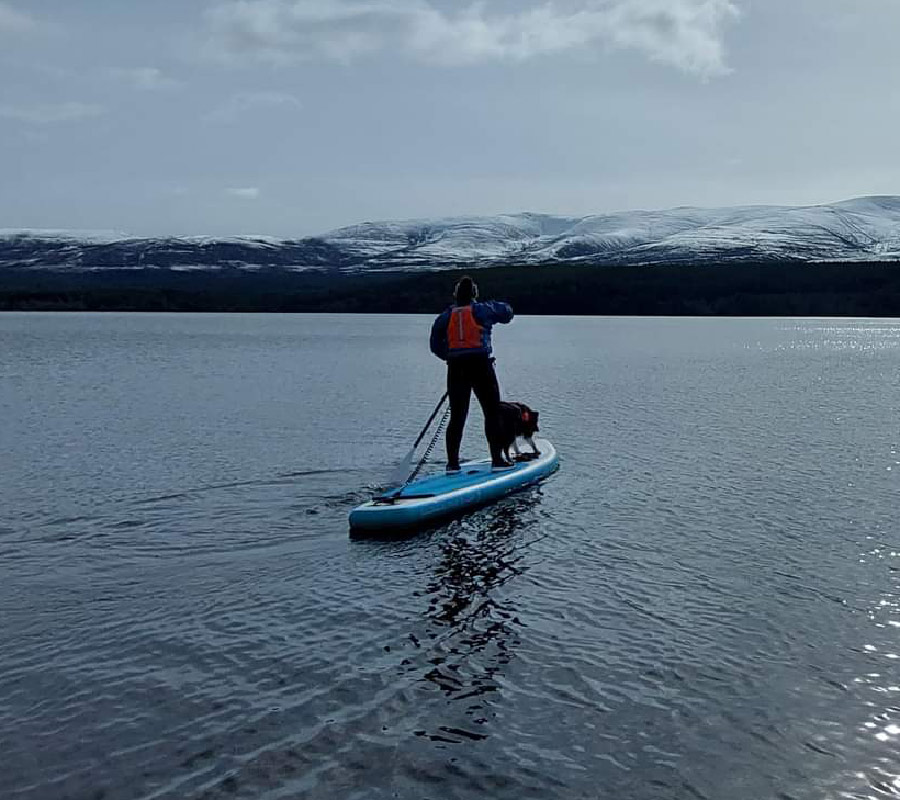
There’s nothing quite like paddleboarding with a dog perched happily on the nose of your board, ears in the breeze, taking in the view with you. It looks effortless when it’s done well. The secret is that “done well” comes from balance, technique and, above all, trust between the two of you.
What you don’t see in the photos is the groundwork. Weeks of it, usually, and most of it nowhere near deep water.
Let me talk you through how it actually comes together.
Before your dog joins you, you need to be genuinely steady on the board yourself. A wobbly, nervous paddler makes for a wobbly, nervous dog, and your dog will feel every hesitation through the deck. Spend time getting comfortable paddling solo, so that when your dog does hop on, you’re a calm, stable base for them.
Be honest about your ability to self-rescue too. Can you get back on your board in deep water, unaided, in cold conditions? If not, that’s your first project. Adding a dog to a situation you can’t yet manage alone isn’t fair on either of you.
I’m no stand-up paddleboarding champion myself, which is why I work alongside qualified paddlesport leaders and instructors. Getting your own skills sorted matters just as much as training the dog.
Paddleboards are weight-rated, so make sure yours comfortably takes you, your dog and your kit together. A wider, thicker, more stable board makes life far easier when you’re learning. Those narrow race boards look wonderful and will dump you both in the loch.
Give your dog a clear, grippy spot to settle. A deck pad or non-slip mat helps enormously, both for their confidence and for protecting the board, because claws can damage a soft inflatable hull. Keep nails trimmed and smooth. Think about where your paddle travels, too, so your dog isn’t sitting somewhere they’ll get clipped on every stroke.
Matching the vessel to the job is a core part of the R.A.F.T. framework.
A few things I coach people on:
Expect your dog to want to sit at the front, and expect that to change how the board trims in the water. A dog too far forward will bury the nose and make steering sluggish. Experiment on flat water until you find the arrangement that works for your combined weight.
The trust part comes from repetition, not from a single dramatic breakthrough. Every calm, successful session tells your dog that the board is a safe, good place to be. Every rushed, frightening one tells them the opposite, and those lessons stick harder.
So we keep sessions short, positive and well within your dog’s comfort zone. We finish while they’re still enjoying it. And if something goes wrong, we treat it as information rather than failure, then go back a step and rebuild.
The essentials, every single time. A buoyancy aid for you, which is mandatory under Scottish loch bylaws anyway. A well-fitted canine buoyancy aid for your dog, with a grab handle, because lifting a wet dog back onto a board without one is genuinely difficult.
Check your leads, collars and harnesses for rust and wear, and never paddleboard with a lead attached to your dog on the water. A reliable recall is your real safety line. Keep first sessions short with breaks on the shore, and mind the cold. Our water stays chilly most of the year, so a wetsuit is wise even on warm days.
Before you launch, run through the REACT framework and take an honest look at wind, water and your exit points.
If you’d like structured, hands-on help, our Sup Pups workshops are made for exactly this. Land Seals sessions cover safety, terminology and technique on shore before warming your dog up to the board, and Sea Dawgs sessions spend more time out on the water alongside a certified paddleboard instructor. You’ll need your own equipment, though canine buoyancy aids can usually be arranged in advance.
Paddleboarding with a dog is one of the most joyful partnerships you can build. Take a look at our Sup Pups sessions, or get in touch and we’ll help you and your four-legged friend become calm, confident paddleboard partners.