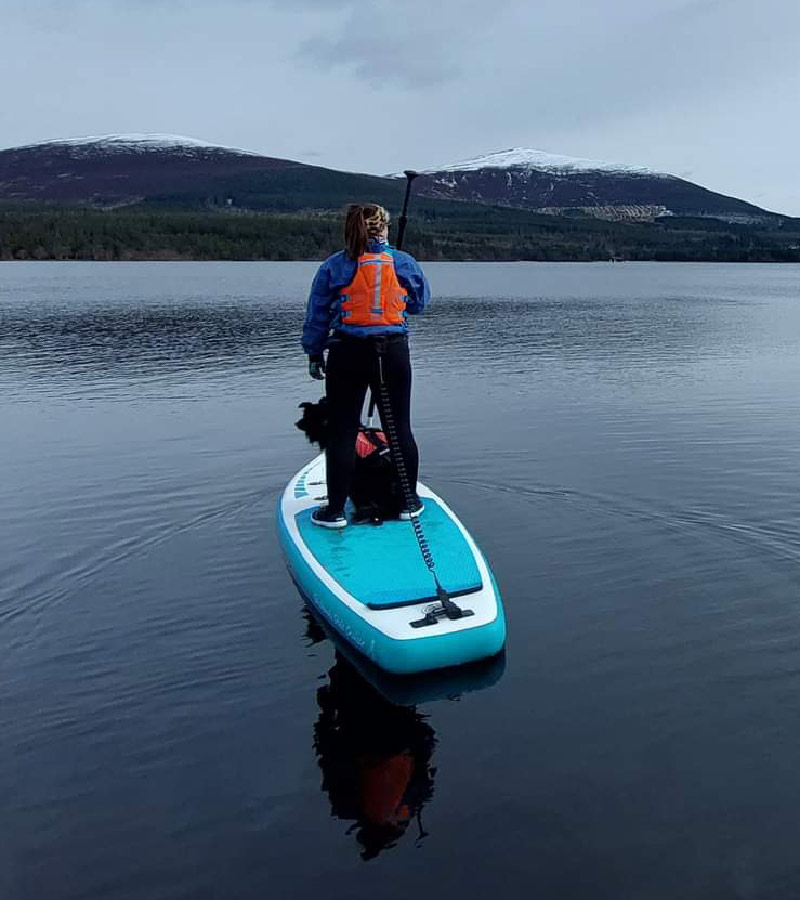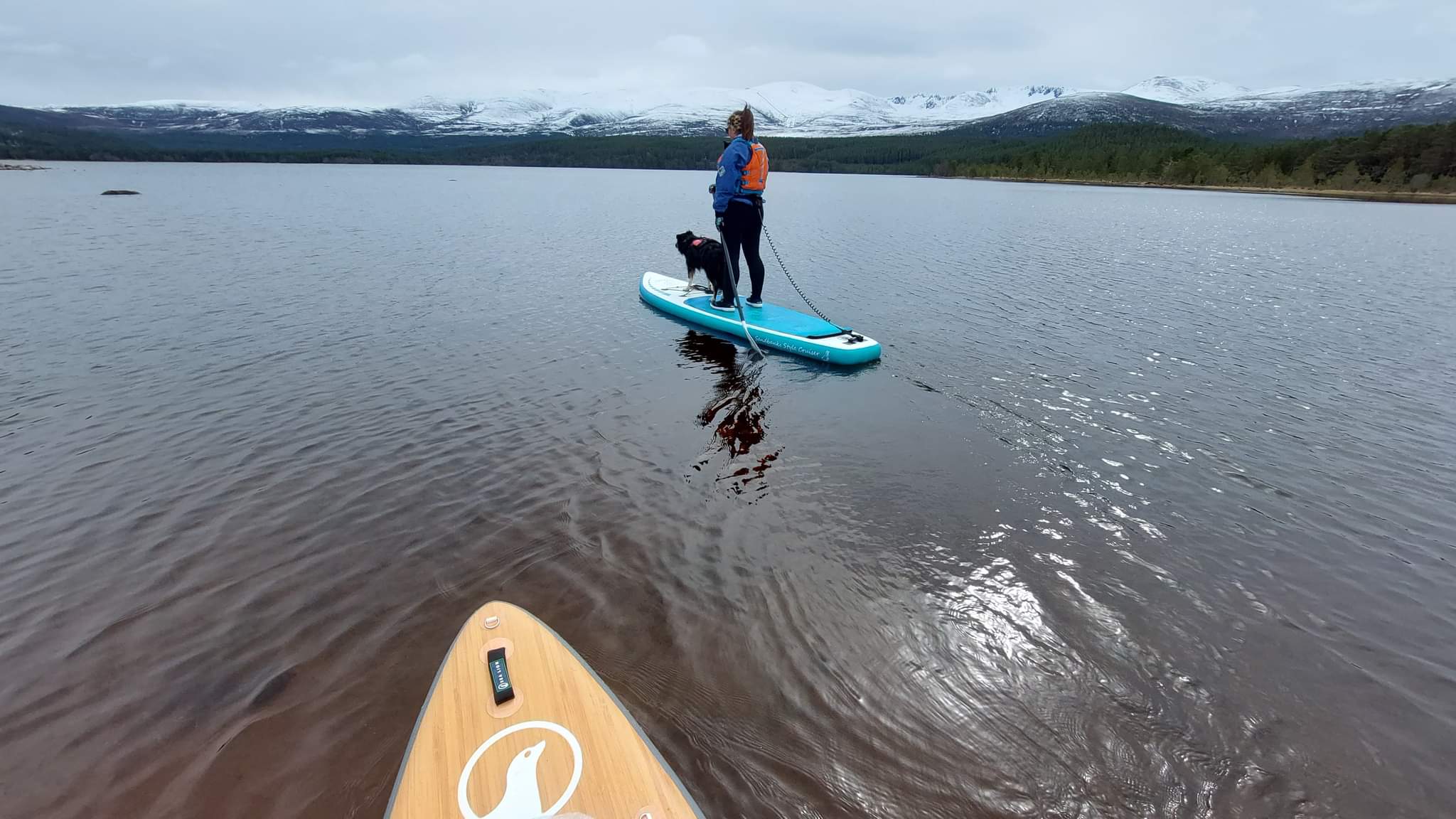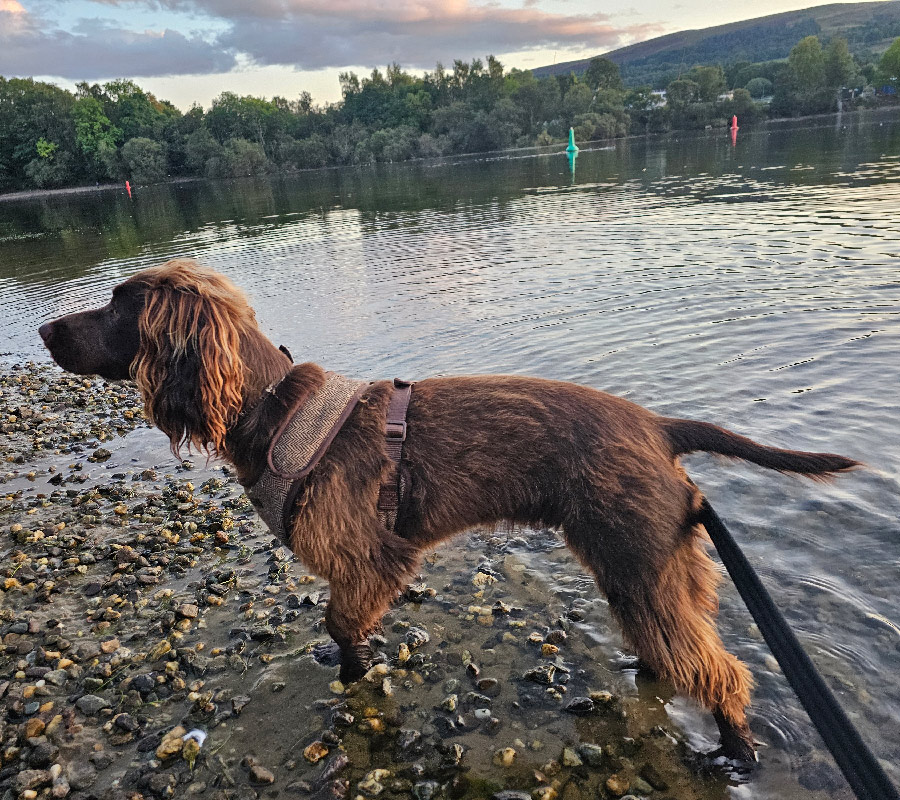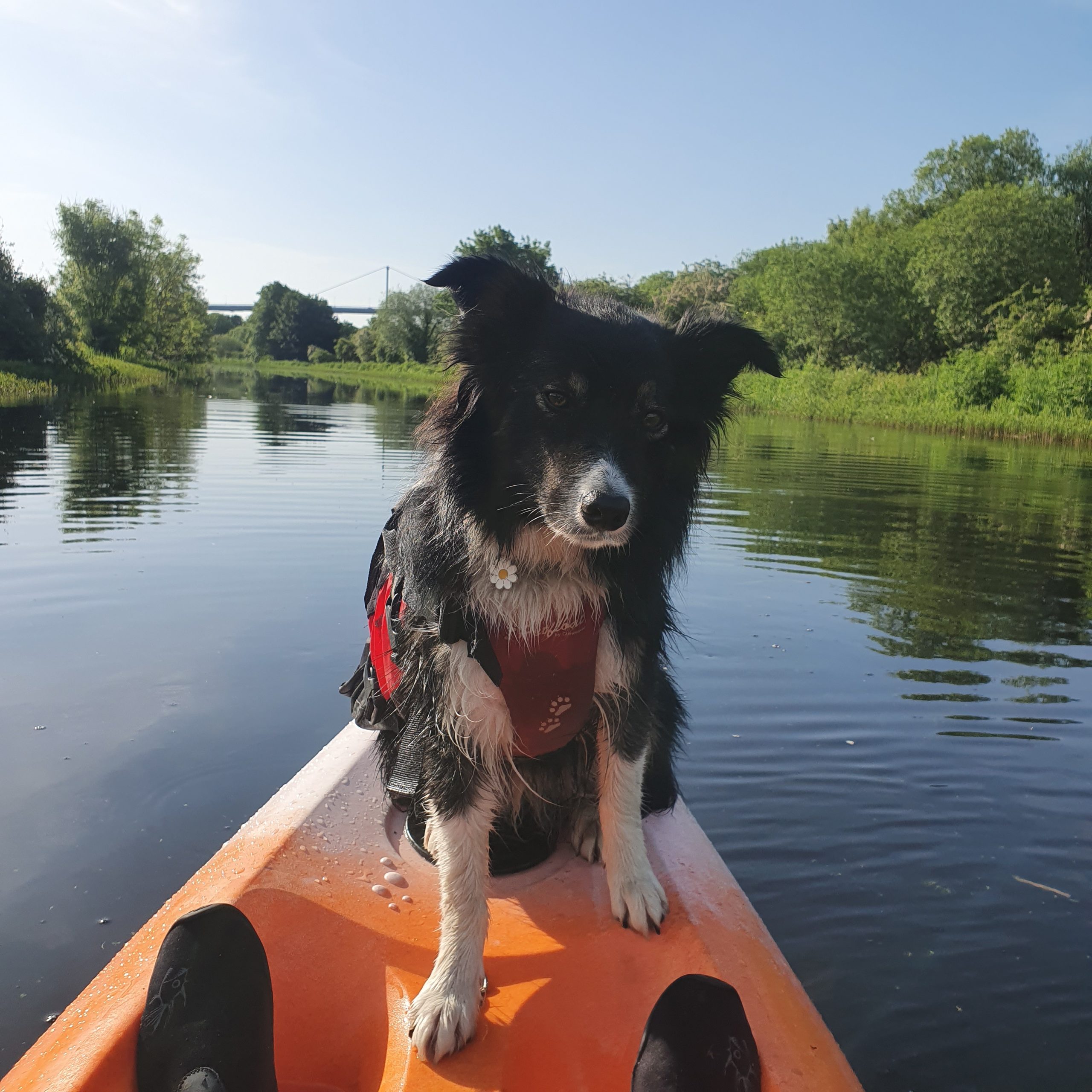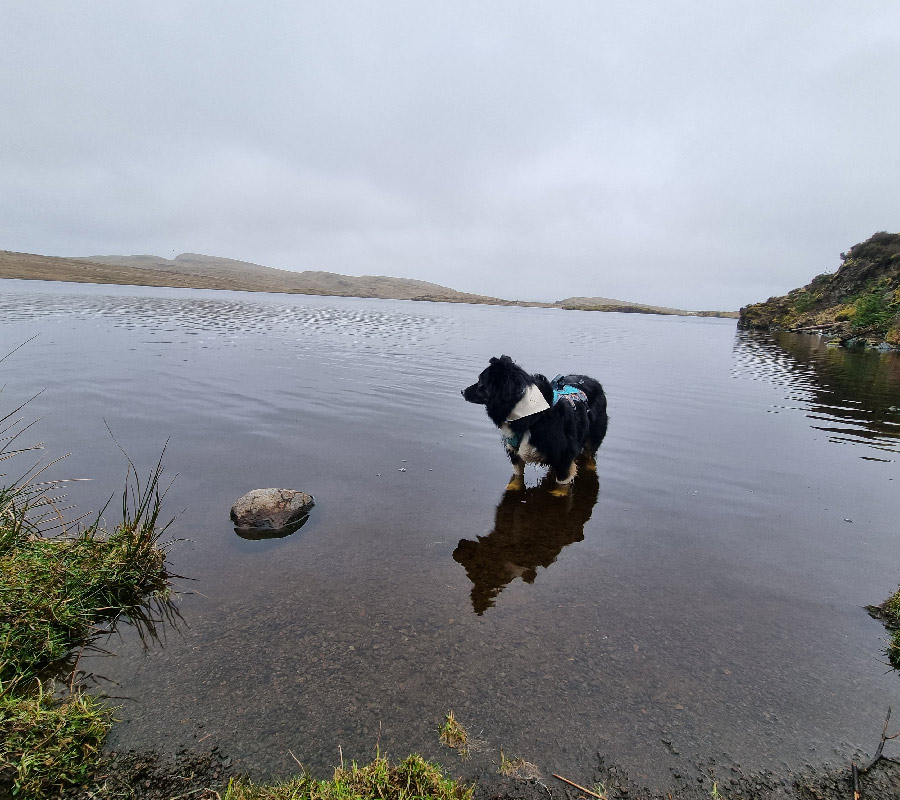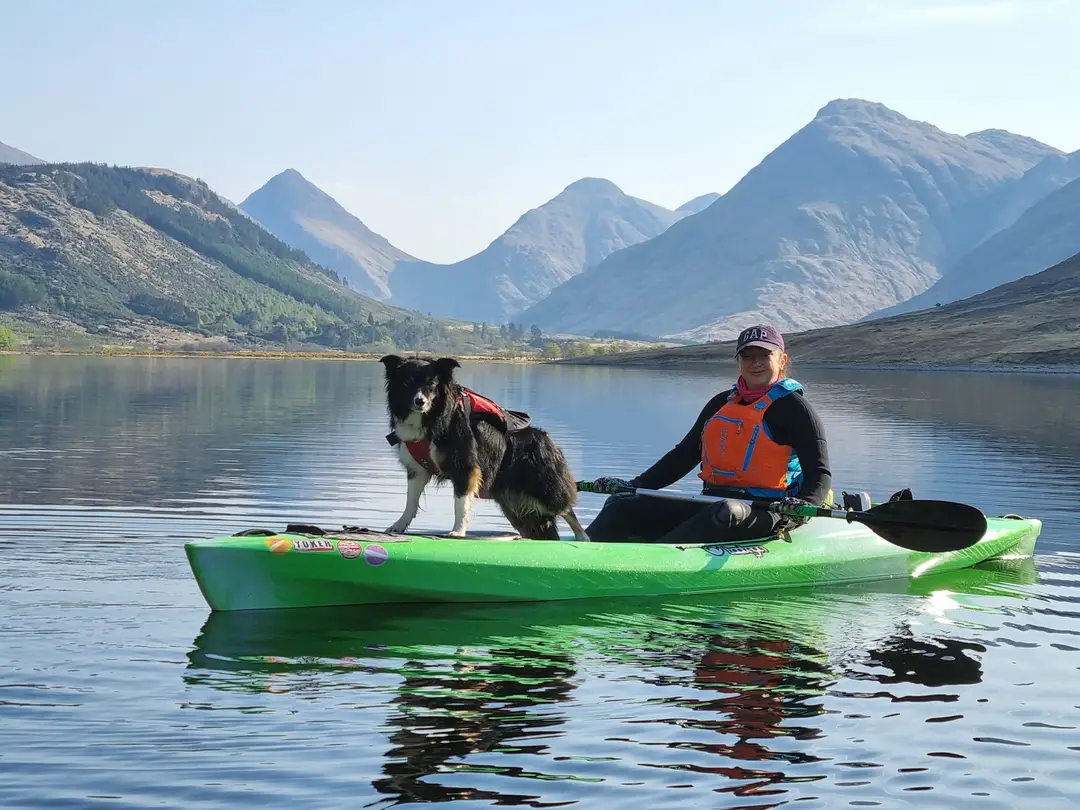
A SUP pup is a dog who genuinely enjoys stand-up paddleboarding with their owner. Not a dog who tolerates being lifted onto a board for a photo. Not a dog clinging on and hoping it ends soon. A proper SUP pup is calm, steady, knows where to sit, and treats the board as a normal, safe place to be.
That distinction matters, because the photo version is easy and the real version takes training. The good news is that most dogs can get there with the right approach and a bit of patience.
There’s no single breed that owns this. I’ve seen tiny terriers who are naturals and big powerful dogs who never quite settle. What the good ones have in common is temperament and training:
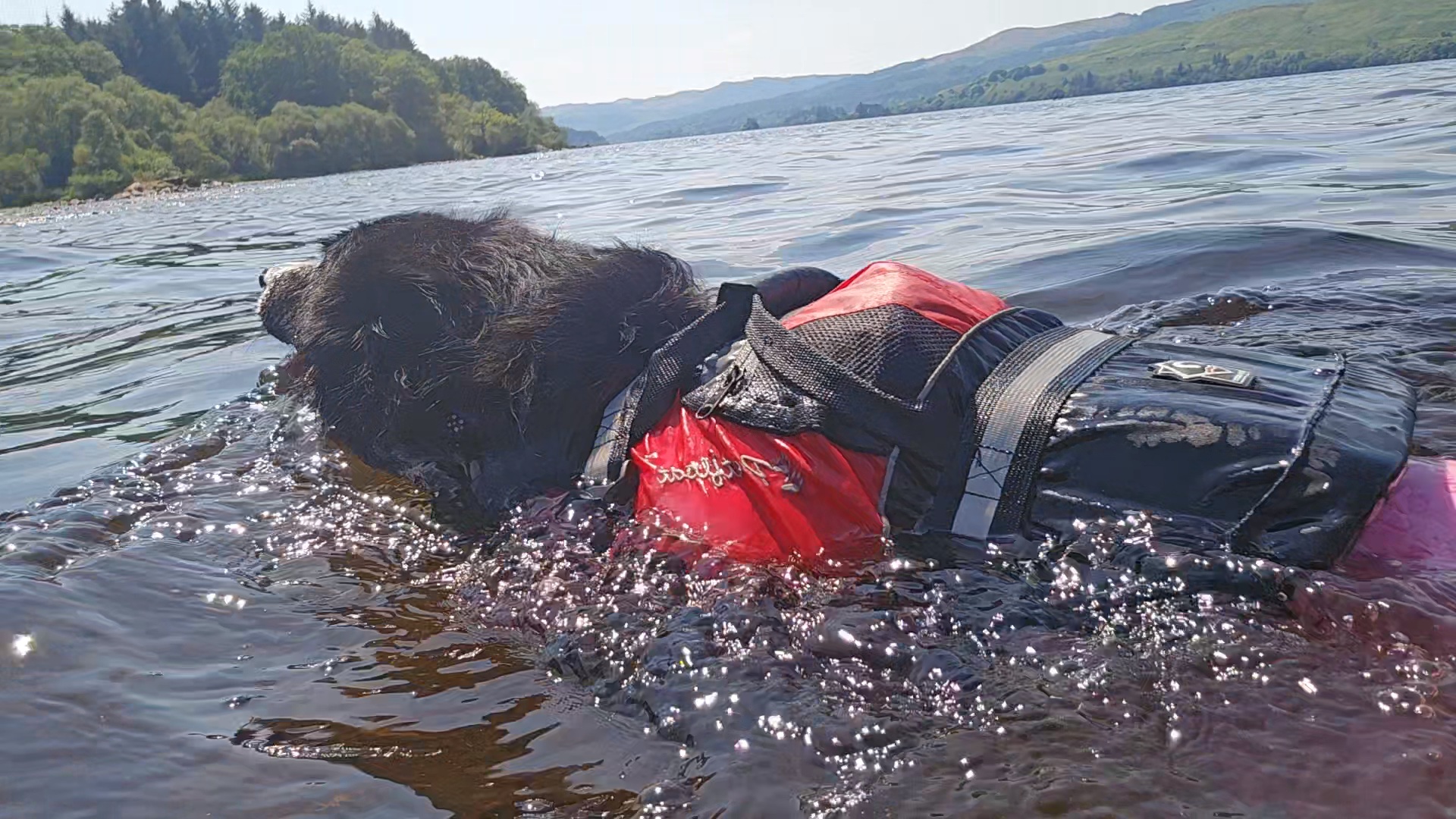
Notice that “being a great swimmer” isn’t top of that list. It helps, and it’s one less thing to worry about, but a well-fitted canine buoyancy aid and good training matter more.
Mostly, with honest caveats. Brachycephalic breeds like pugs and French bulldogs need extra care, because their breathing and body shape make swimming genuinely hard work, and a buoyancy aid becomes essential rather than optional. Long-backed dogs like dachshunds need thought about how they get on and off without twisting awkwardly. Older dogs and dogs with arthritis may find an unstable platform uncomfortable rather than fun.
None of that automatically rules a dog out. It just means the plan needs adjusting, and occasionally it means being honest that a gentler activity would suit them better. I’d always rather tell you that than watch a dog struggle through something they don’t enjoy.
The path is always the same shape. Land first, water later.
We start with the board beached and stable, building a happy association with treats and calm praise. We teach a clear on-and-off cue so boarding is controlled rather than a leap. The aim is for the board to become the least interesting object on the beach.
Then we introduce movement, so a shifting surface stops being startling. Soft sand under the board, wobble cushions, gentle rocking while your dog holds their position. This builds real physical conditioning as well as confidence.
We teach your dog a specific place to sit or lie and reward calm there. This is the single most useful thing for your balance later, because a dog who stays put is a dog you can paddle with.
Only then do we get on the water, in shallow calm conditions, for very short stints with plenty of breaks on the shore. Kneeling before standing. Finishing while your dog is still enjoying it.
Recall runs through all of it. It’s one of the four pillars of the R.A.F.T. framework, and on a paddleboard it’s the thing standing between a small mishap and a real problem.
A buoyancy aid for you, which is mandatory under Scottish loch bylaws anyway. A properly fitted canine buoyancy aid with a grab handle for your dog, which makes lifting them back on board vastly easier than grabbing at a collar. A grippy deck pad or non-slip mat so your dog isn’t scrabbling for purchase. And check your board’s weight rating covers you both comfortably.
Keep nails trimmed, because claws and inflatable hulls are not friends. Give all your kit a once-over regularly for rust and wear, since salt water is unkind to buckles and clips.
Our Sup Pups workshops are built specifically for this. Land Seals sessions cover safety, terminology and technique on shore before warming your dog up to the board, then a short guided group paddle tailored to the group’s ability. Sea Dawgs sessions spend more time out on the water alongside a certified paddleboard instructor, and make a natural progression once you’ve got the basics.
You’ll need your own equipment for these, though canine buoyancy aids can usually be arranged in advance. If group settings aren’t right for your dog, our one to one training sessions cover the same ground privately and at your dog’s pace.
Every confident SUP pup started as a dog who’d never seen a board. If you’d like to start that journey, have a look at our Sup Pups sessions or get in touch, and we’ll work out the right first step for your four-legged friend.