A lot of people assume dog swimming is something that either happens or it doesn’t. Chuck the dog in, and either they get it or they don’t. I really want to move you away from that thinking, because forcing a dog into water is one of the surest ways to create fear that lasts for years.
Confident dog swimming is built, gently and gradually, the same way we build any other skill: with patience, positive experiences and a genuine respect for what your dog is telling you.
Here’s how I’d go about it.
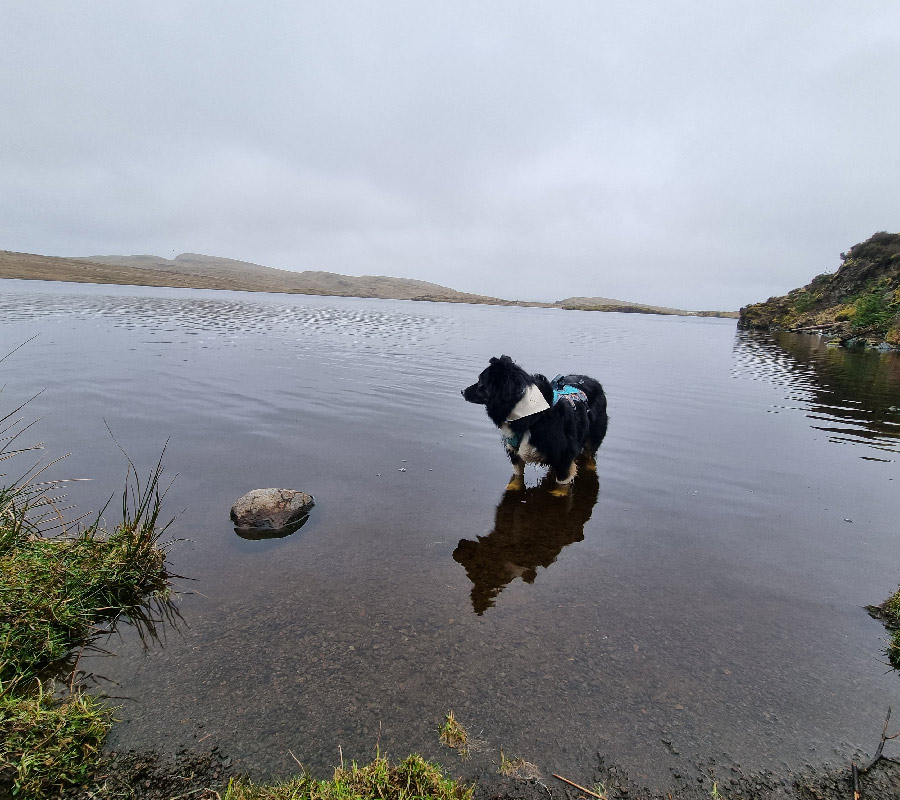
I always begin in calm, shallow water where your dog can stand and feel the ground under their paws. Let them paddle at the edge, explore, and come and go as they please. Bring the good treats, the ones you save for special occasions, and keep your own energy relaxed.
Your dog reads your body language constantly. If you’re tense, hovering and repeating their name in a worried voice, they’ll conclude there’s something to worry about. Stand back a little. Let curiosity do the work.
Short and sweet is the rule. A few happy minutes beats a long, worried slog every time. This gentle, individual approach is exactly what we focus on in our one to one training sessions.
Progress isn’t linear and it isn’t a race. Some dogs are swimming happily within a fortnight. Others need a whole season of paddling about in the shallows first, and that’s completely fine.
A useful trick is to walk parallel to the shoreline in ankle-deep water rather than heading straight out. Your dog follows you along, gets wet without ever facing a wall of deep water, and builds positive associations. Another is to bring a confident, water-loving friend along, because dogs learn a great deal by watching each other. Just make sure the two of them actually get on.
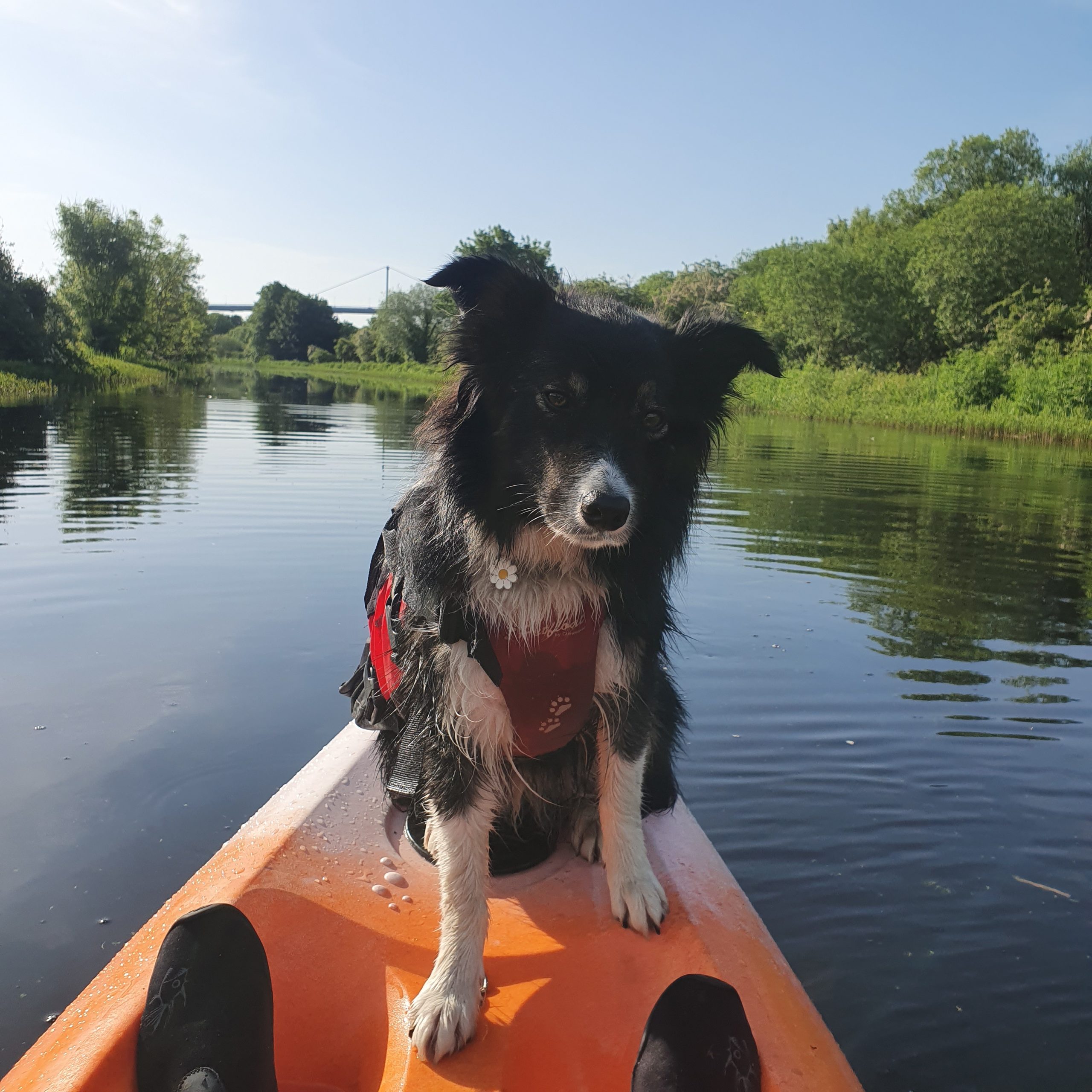
Even for dog swimming close to shore, a well-fitted canine buoyancy aid is a wonderful confidence tool. It holds your dog level in the water so their head stays clear and their paddling is efficient, rather than letting them slip into that nose-up, tail-down struggle.
It also gives you a secure grab handle if you need to support or lift them, which saves hauling on a collar. Buy from a reputable brand, fit it properly around the chest and belly so it doesn’t rub or slip, and check the straps and buckles regularly, since salt water and winter conditions cause real wear.
This is Scotland, and our water is cold for most of the year, often in single figures even in summer. Cold water shock is a real danger for dogs as well as people, and short-haired, lean, very young or elderly dogs lose heat especially fast.
Keep swimming sessions short in cool conditions. Dry your dog off thoroughly afterwards and get them into a dry coat if they’re the type to feel it. Watch for shivering, stiffness or sluggishness once they’ve stopped moving, because a dog can seem perfectly warm while active and then cool down sharply once they settle.
These conditions checks sit right at the heart of the REACT framework.
Please learn to read your dog in the water. Some signs to watch for:
Be aware, too, of secondary drowning. If your dog inhales water, keep a close eye on them over the following days for coughing, laboured breathing, lethargy or blue-tinged gums, and contact your vet if you’re concerned. It’s uncommon, but it’s serious, and awareness matters.
A few habits worth dropping. Repeatedly throwing a ball into deep water encourages a dog to push far past their limits, because most dogs will keep going long after they should have stopped. Sticks near water bring their own injury risks. And I’d steer clear of fast-flowing water, weirs and steep-sided banks entirely while your dog is learning.
Most importantly: never force it. We don’t drag, throw or push a dog into water to “get them over it.” That isn’t confidence, it’s compliance through fear, and it tends to backfire badly. When in doubt, bring in professional help rather than pressing on alone.
Safe, happy dog swimming is completely achievable with the right approach and a bit of patience. If you’d like support introducing your dog to water, get in touch or explore our one to one training sessions, and we’ll build a plan around your dog’s pace and personality.
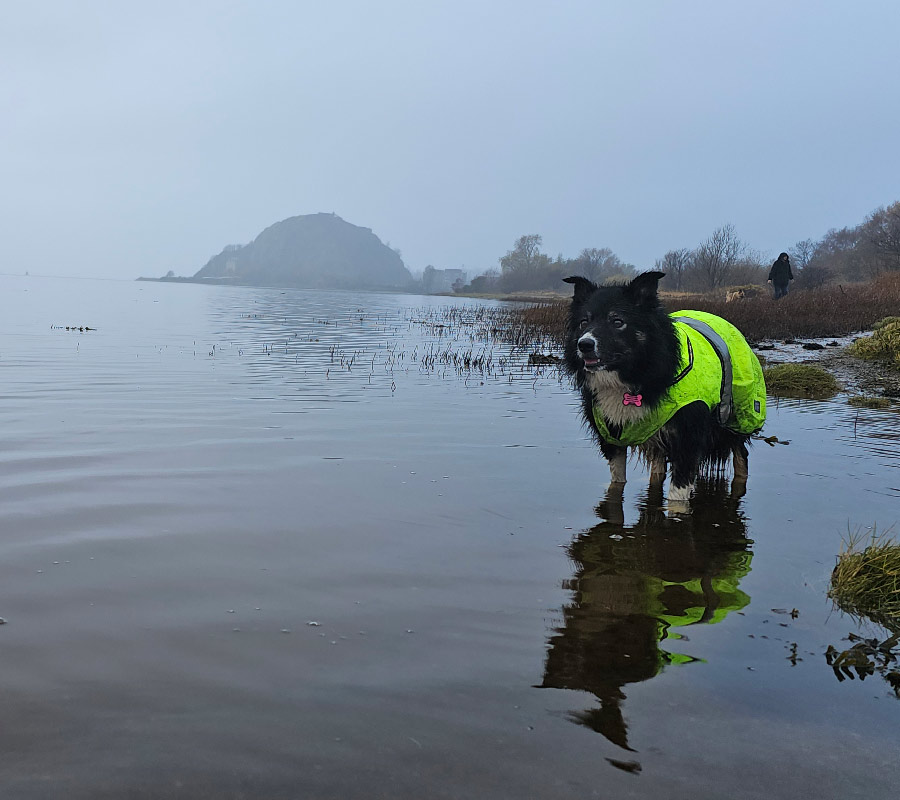
Remember how to REACT to reduce the risk to you and your dog around water