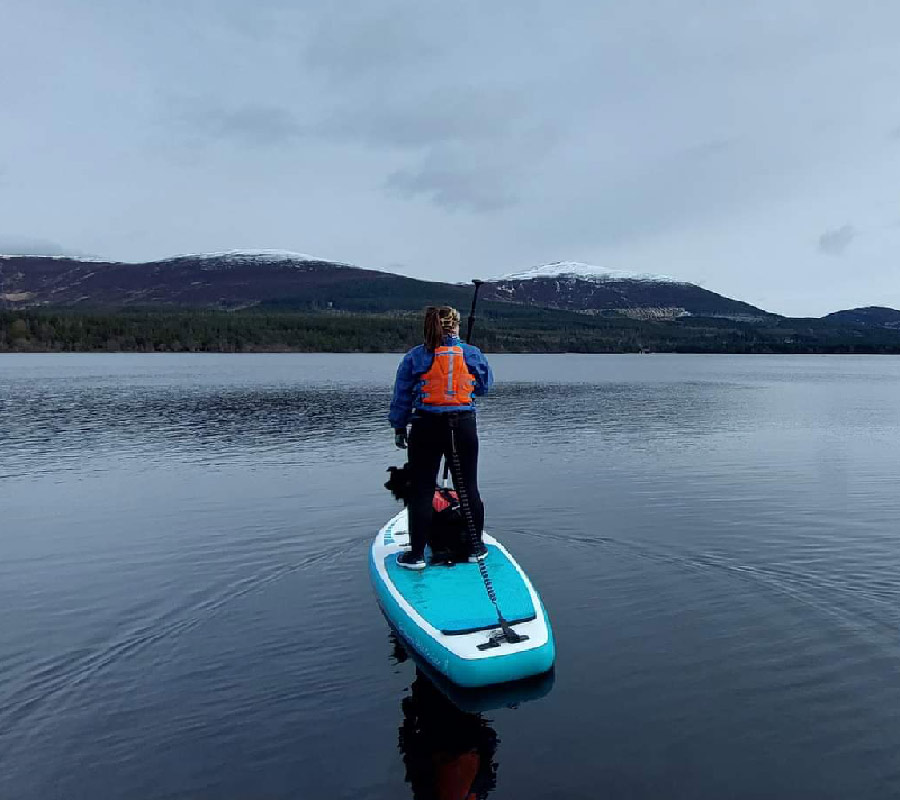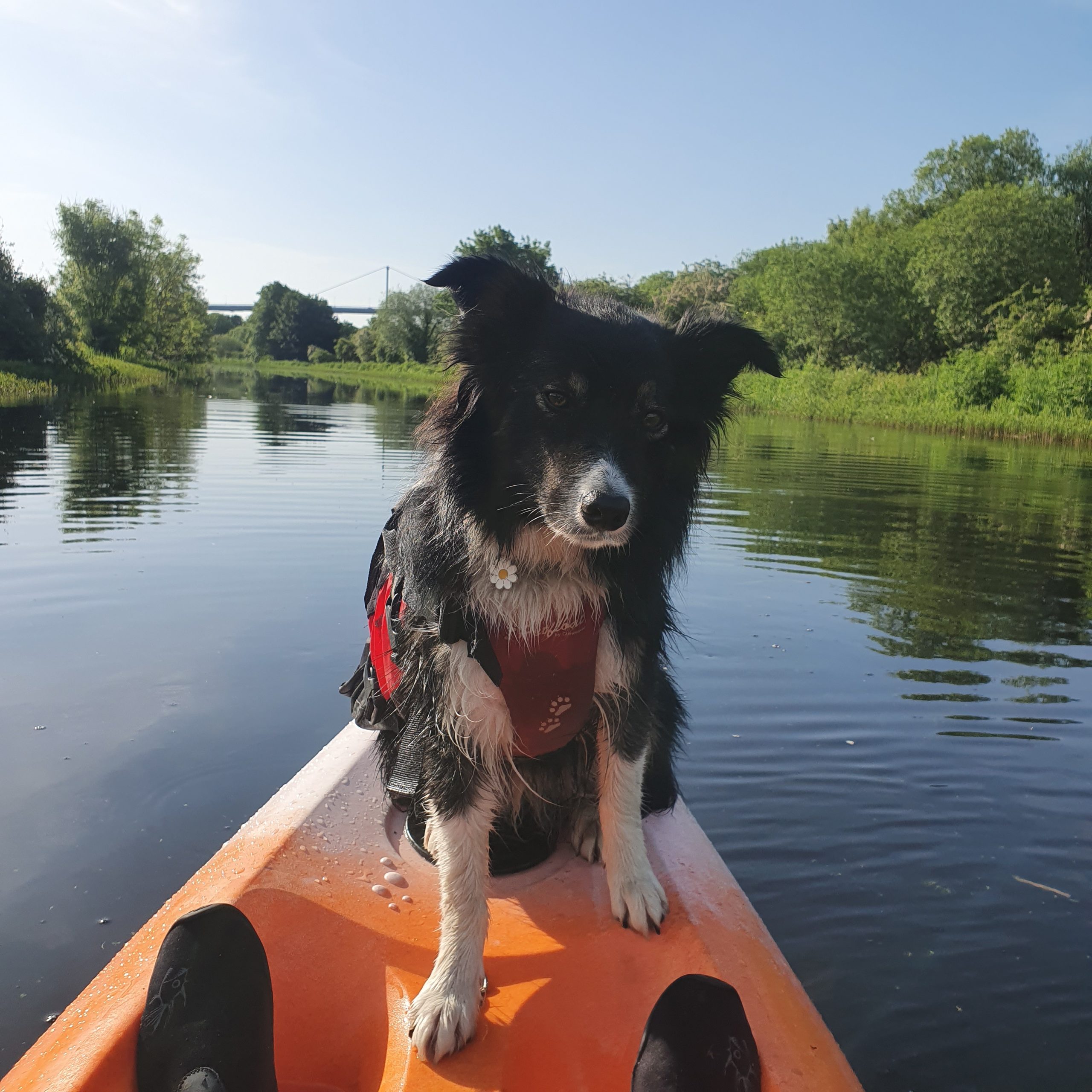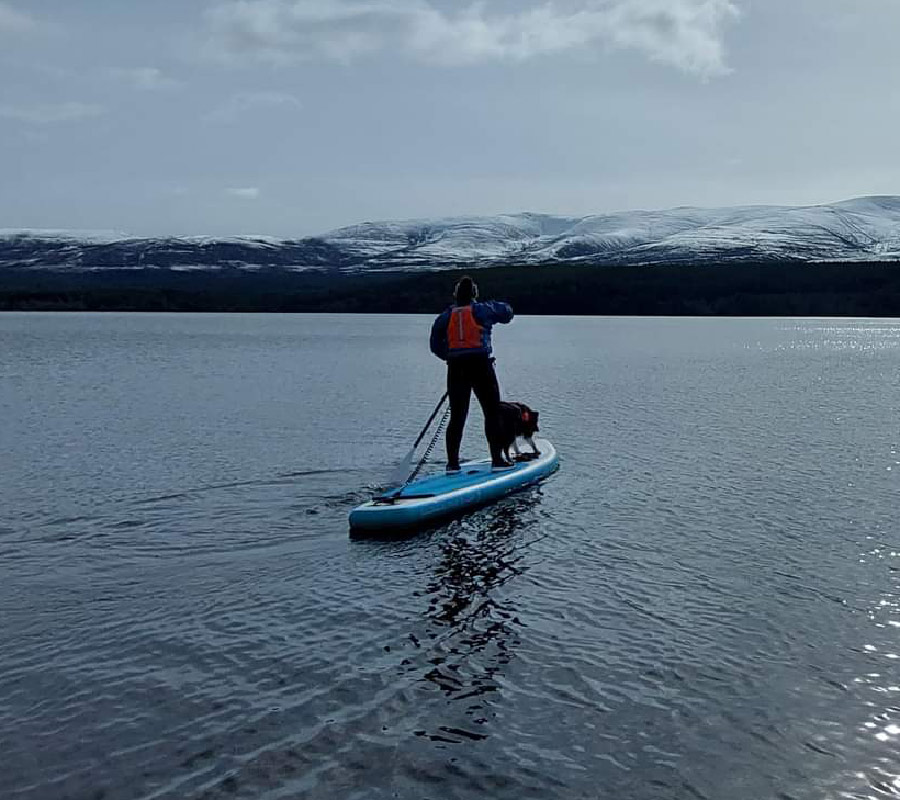
Every so often an email arrives that starts the same way: “I know you’re in Scotland, but…” It usually comes from somewhere like Michigan, Texas or the Pacific Northwest, from an owner who has searched for a dog paddlesports trainer nearby and found precisely nobody. The good news is that the “but” doesn’t matter nearly as much as people think. I work with dog owners across the USA by video call, and the results hold up just fine against my in-person sessions.
Here’s the honest truth about canine paddlesports: most of the important work happens on dry land, long before anyone gets wet. Recall, balance, calm boarding cues, confidence around kit — these are the foundations of every safe paddle, and every one of them can be coached over a video call in your living room or backyard. If you’ve read my post on why dog training is the foundation of water adventures, you’ll know I’d rather you spent three sessions on land than ten minutes swimming after a panicked dog.
More than most people expect. In remote sessions with American clients we typically work through:
By the time you head to your local lake, you’re not starting training — you’re finishing it.
Scotland sits five hours ahead of the East Coast and eight ahead of the Pacific. That sounds awkward until you do the arithmetic: my late afternoon and evening slots land in your morning and lunchtime. A 6pm call here is 1pm in New York and 10am in Seattle. No 3am heroics required on either side of the Atlantic.
From Lake Tahoe to the Florida coast, conditions vary wildly — but dogs and water behave much the same everywhere. Cold-water shock matters as much on a Minnesota lake in May as it does on a Scottish loch. Boat traffic, wind chop and long swim distances don’t care which continent you’re on. During your consultation we’ll talk through the specific waters you plan to paddle, and I’ll tailor the safety work accordingly — the essential checks I recommend before every trip apply just as well stateside.
Before our first session we have a consultation call, and one of the things I’ll advise on is kit: a properly fitted canine buoyancy aid, a suitable board or kayak setup, and any training aids we’ll use. Everything I recommend is available from US retailers, so you won’t be paying transatlantic postage — I’ll simply tell you what to look for and what to avoid.
Much the same as a first session in person: a proper conversation about your dog, your experience and your goals, followed by practical foundation work you can practise between calls. Sessions are one to one, so the pace is set by your dog, not a curriculum.
If you’re in the USA and you’d like your dog on a board this season, don’t let geography put you off. Head over to the remote sessions page to book a consultation call, and we’ll take it from there.