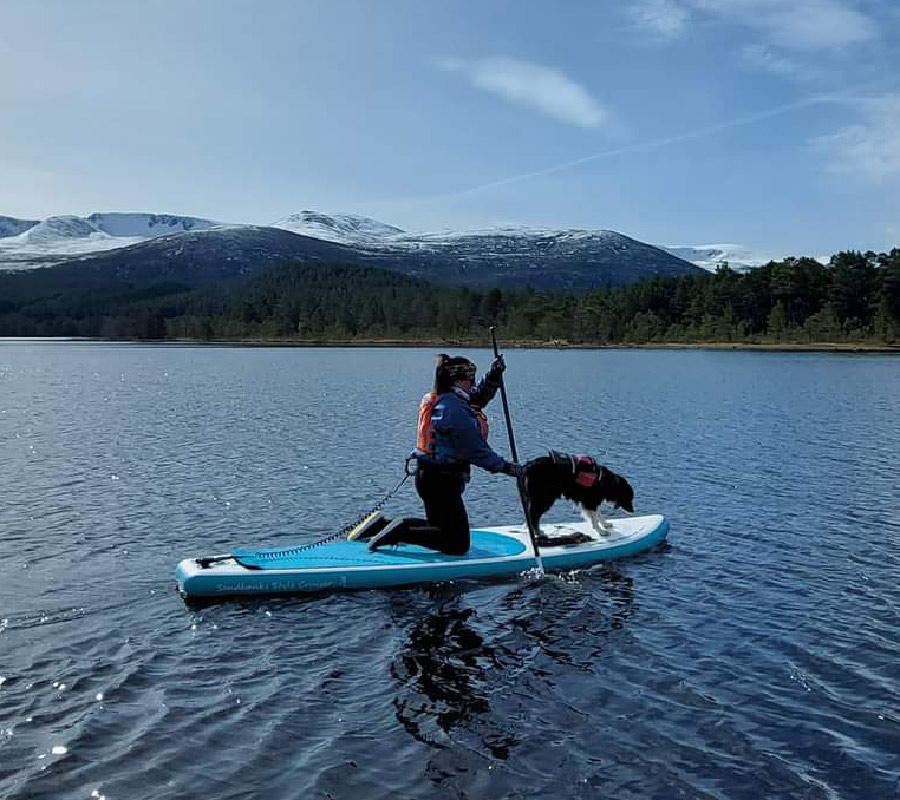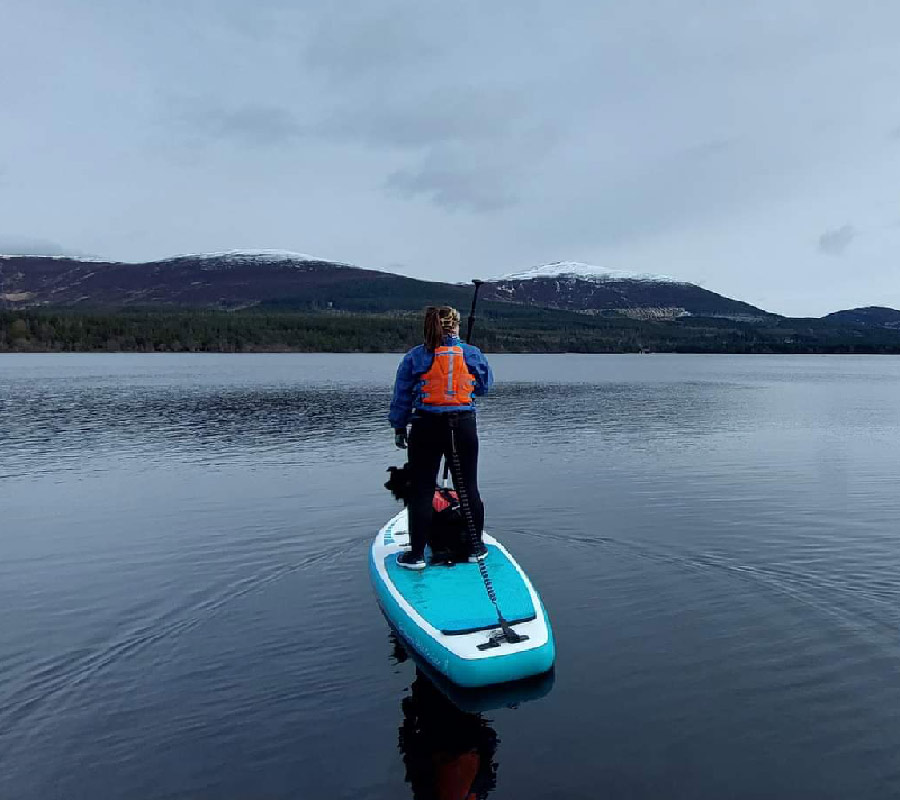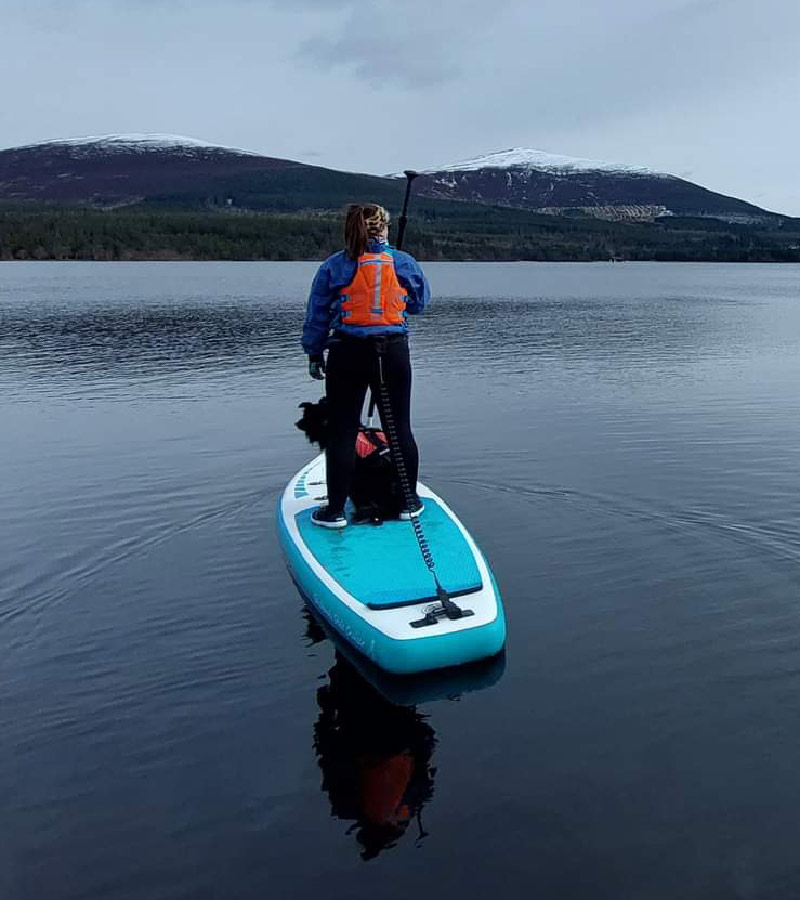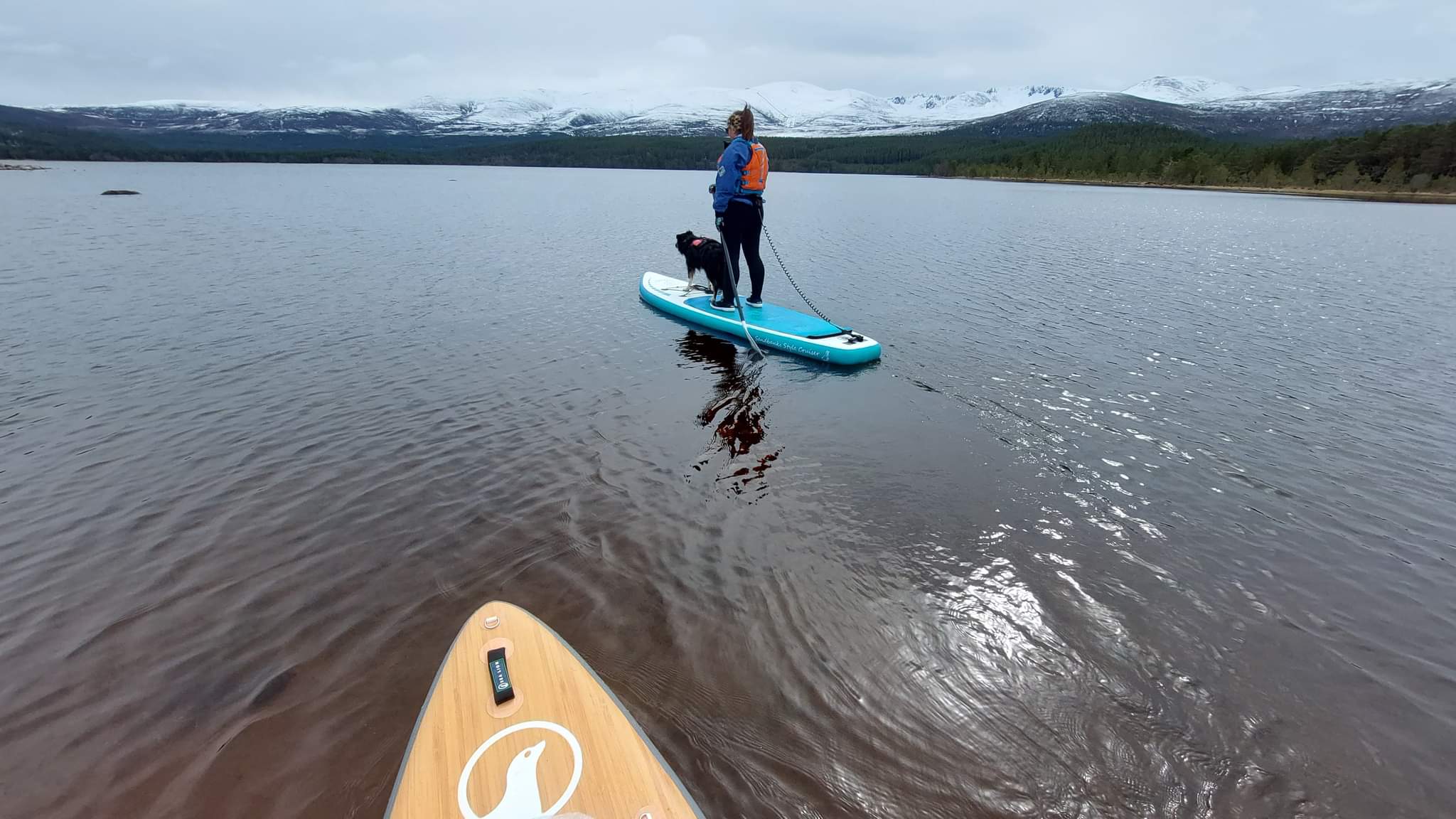
Pack raft adventures are, to my mind, one of the most exciting ways to explore Scotland’s wild waterways with a dog. A pack raft folds into a rucksack, weighs a handful of kilos, and lets you reach lochans and quiet river sections you’d never get to with a hard boat on a roof rack. Walk in, inflate, paddle, pack up, walk out.
For a dog and owner who already work well together, it’s a brilliant next step. For a pair still finding their feet, it’s a big ask.
Let’s talk about the difference, because it’s an important one.
Pack raft adventures usually mean remote water, a long walk from the car, and no easy bail-out. That changes the risk picture completely. If something goes wrong two hours from the nearest road, you’re a long way from help and you’re carrying everything you need to solve it yourself.
So my first bit of advice is unglamorous: earn it. Your dog should already be relaxed on a stable vessel, have a recall you’d genuinely bet on, and have plenty of short trips behind them before you commit to anything remote.
If you’re not there yet, our one to one training sessions are the right place to build that foundation properly.
Here’s the practical issue that catches people out. Pack rafts have soft, inflatable hulls, and dogs have claws. A puncture on a remote loch is a serious problem, not an inconvenience.
Manage it properly:
Choosing a vessel that suits the job and the dog is exactly what the “appropriate vessel” part of the R.A.F.T. framework is about.
Pack rafts are light and sit high on the water, which makes them noticeably responsive to weight shifts, more so than a sit-on-top kayak. A dog standing up to look at a heron can move you more than you’d like. Sit low, keep your movements smooth, and pick your first outings on flat, sheltered water rather than anything moving.
Space is tight, too. Work out at home where your dog will actually sit once your pack is aboard, because a dog with nowhere comfortable to settle will fidget, and fidgeting is what tips people in.
I’d steer well clear of moving water with a dog aboard unless you have serious river skills and a very settled dog. Rivers add strainers, entrapment risk and current, and they’re unforgiving of mistakes.
Scotland’s upland water is cold. Genuinely cold, often in single figures even in summer, and higher lochans stay colder still. Cold water shock is a real risk for both of you, and being remote makes the consequences considerably worse.
I’d wear a wetsuit or appropriate thermal layers even on a warm day, and I’d carry dry layers for you plus a towel and a coat for your dog. A wet dog in a hill breeze cools fast once they stop moving.
Weather in the hills turns quickly. Check the forecast, set a turn-back time and stick to it, tell someone your plan and expected return, and be realistic about mobile signal. All of which is the “conditions” and “alert” thinking from the REACT framework, applied somewhere with far fewer safety nets.
Buoyancy aid for you, mandatory on Scottish lochs and simply sensible everywhere. Canine buoyancy aid with a grab handle for your dog, which also makes hauling them back into a pack raft far easier, and that’s a genuinely awkward manoeuvre in a small boat. And absolutely no lead attached to your dog on the water, remote or otherwise.
Pack a small first aid kit for both of you, including something for cut paw pads, since walk-ins over rough ground take their toll. Carry fresh water and a bowl so your dog isn’t drinking whatever you’re floating on.
Follow the Scottish Outdoor Access Code as you go. Keep your dog under close control near livestock and ground-nesting birds, particularly in spring and early summer, and carry out everything you carry in, including your dog’s waste.
Start with a short walk-in to a small, sheltered loch you already know. Get a couple of easy wins under your belt. Learn how your dog copes with the walk, the inflating, the waiting about, all the unglamorous bits either side of the paddle.
The proper expeditions will be far more enjoyable once that routine is second nature for both of you. There’s no prize for rushing it.
If you’d like help getting your dog ready for pack raft adventures, have a look at our one to one training sessions or get in touch. Tell me where you’d like to get to and we’ll build a plan to get you both there safely.