Dog water safety isn’t a one-off lesson you learn and then forget about. It’s a short routine you run through every single time, the way a climber checks their knots before they leave the ground. Most of it takes five minutes. All of it matters.
I’ve built my whole approach around two frameworks that keep this simple and repeatable, so there’s nothing to remember from scratch and nothing to improvise.
Here’s how I use them before every trip.
The R.A.F.T. framework is my pre-launch check, and it covers the four things that matter most:
If any one of those four gets a shaky answer, that’s your cue to scale the trip back rather than push on and hope. Scaling back isn’t failure. It’s the whole point of checking.
Where R.A.F.T. checks you and your kit, the REACT framework checks the environment and what could go wrong: Reduce risk, Enrichment, Alert, Conditions, Treatment.
In practice that means looking honestly at the water and the weather. Wind strength and direction, and crucially whether it’s pushing you offshore. Tides and currents if you’re on the coast. Water temperature. Other water users. Where your exit points are if things change.
It also means knowing what you’d actually do in an emergency. If your dog gets into trouble in fast-flowing water or on ice, you call 999 rather than going in after them. That sounds hard, and it is, but a dog with a rescue team is in a far better position than a dog with a drowning owner.
This is the bit people let slide, and it’s the bit that bites. Salt water and winter conditions cause rust and wear surprisingly quickly. Every few trips, properly look at:
Rinse everything in fresh water after a sea trip and let it dry properly before it goes away. It doubles the life of your kit, and more importantly it means you can trust it.
Give your dog a quick once-over too. Paw pads for cuts and splits, ears if they’ve been swimming a lot, nails trimmed so they’re not shredding an inflatable hull. And take an honest look at how they seem today. A dog who’s stiff, tired or off their food doesn’t need a big day on the water.
Age and health matter here. Older dogs and dogs with arthritis feel cold water and unstable surfaces far more than a fit three-year-old does.
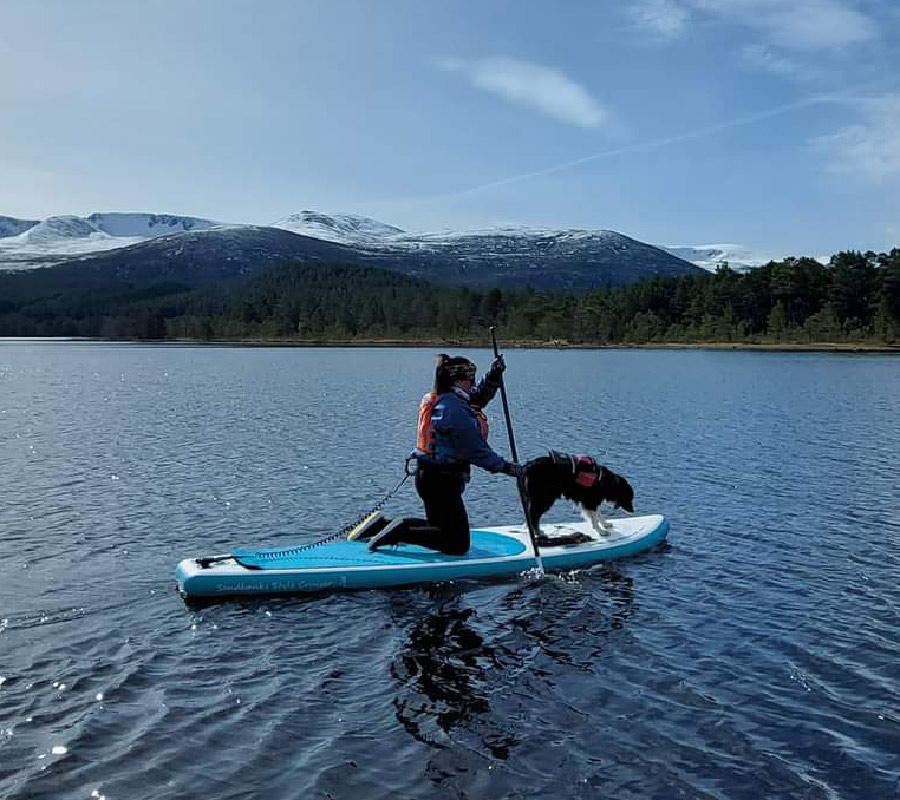
I’ll repeat this because it’s the piece of dog water safety advice I most often see ignored. Never paddle with a lead attached to your dog on the water. If your dog goes in and that lead snags on anything, you have a genuine emergency and very little time to fix it.
Leads are for the shore, the walk down and the car park. On the water, your trained recall is what keeps your dog safe. There is no shortcut around that.
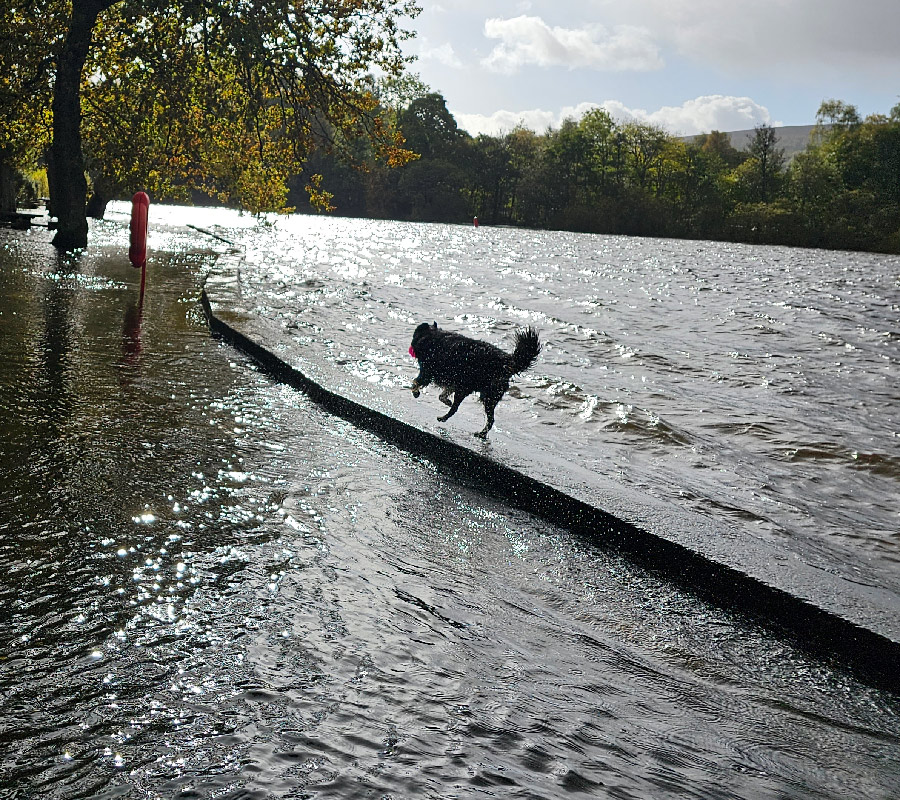
Scottish water sits in single figures for much of the year and rarely gets properly warm even in August. Cold water shock affects dogs as well as people, and lean, short-haired, very young or elderly dogs chill fastest.
Keep sessions shorter in cold conditions, dry your dog off afterwards, and watch for shivering, stiffness or unusual tiredness once they settle. A dog often seems fine and warm while they’re still moving, then feels it badly half an hour later.
Keep secondary drowning on your radar too. If your dog has inhaled water, watch them over the following days for coughing, laboured breathing, lethargy or pale, blue-tinged gums, and ring your vet if anything seems off.
Especially early on, short sessions broken up with breaks on the shore are both the safest and the most effective. A tired dog makes poor decisions, and so does a tired paddler. Finish while you’re both still enjoying it and you’ll get a better session next time.
If any part of this checklist leaves you unsure, that’s not a reason to press on and hope for the best. It’s a reason to get some help. Have a look at our one to one training sessions, or just get in touch and ask. I’d far rather answer a daft question on the shore than hear about a near miss afterwards.
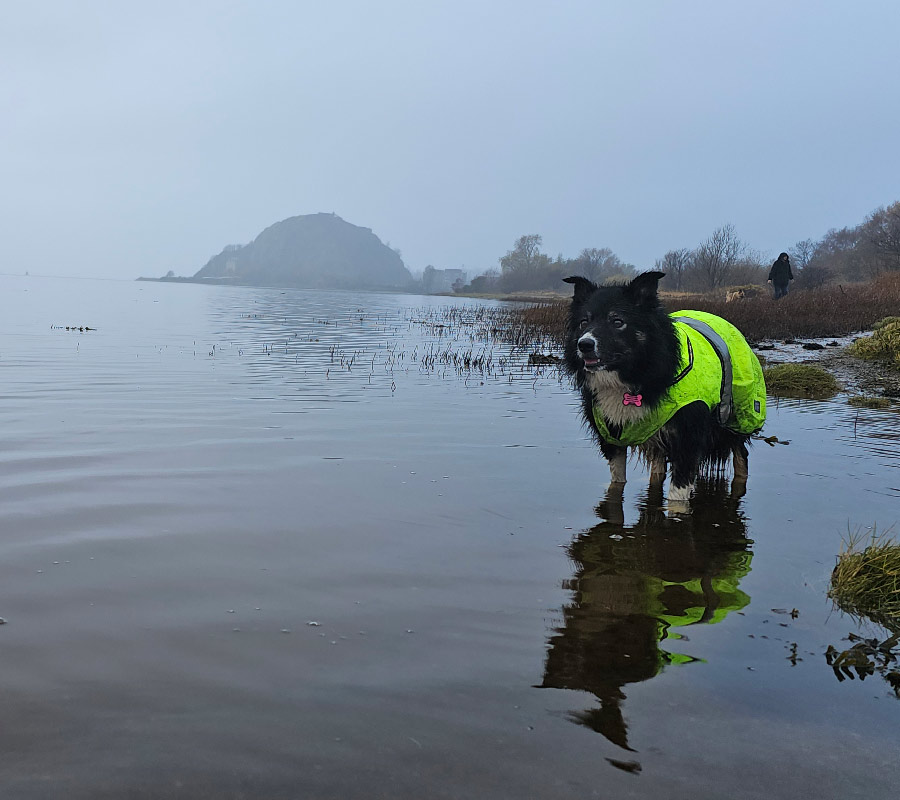
Remember how to REACT to reduce the risk to you and your dog around water