“Don’t worry, dogs can all do the doggy paddle.” I hear it constantly, and I understand why. It even has a dog in the name. But it simply isn’t true, and believing it can put your four-legged friend in real danger.
Yes, most dogs will instinctively paddle their legs if they end up in water. No, that doesn’t mean they can swim safely, keep their head up, or get themselves out again. The doggy paddle is a reflex, not a guarantee.
Let me explain the difference, because it’s the difference that matters.
Real swimming means staying afloat comfortably, keeping the airway clear of the water, steering with some control, and having the stamina to reach safety. A lot of dogs manage the leg movement but sit far too low in the water, tire quickly, or panic.
Here’s the part that catches people out: a struggling dog often doesn’t look dramatic. There’s rarely thrashing or noise. A dog in trouble tends to go quiet, vertical and low, with just the nose above the surface. It happens faster and more quietly than you’d expect, which is why watching your dog closely matters so much.
Knowing your dog’s honest ability in the water is one of the reasons I lean so heavily on the REACT framework. You need to know where your dog’s limits are before you reach them.
Some dogs are built for water, and some really aren’t. A few tendencies I see again and again:
Even the classic water-lovers, retrievers, spaniels and poodles, aren’t exempt. Age, injury, fitness and confidence all matter just as much as breed. I’ve met plenty of labradors who’d rather not, and a few pugs who adore the shallows with the right support.
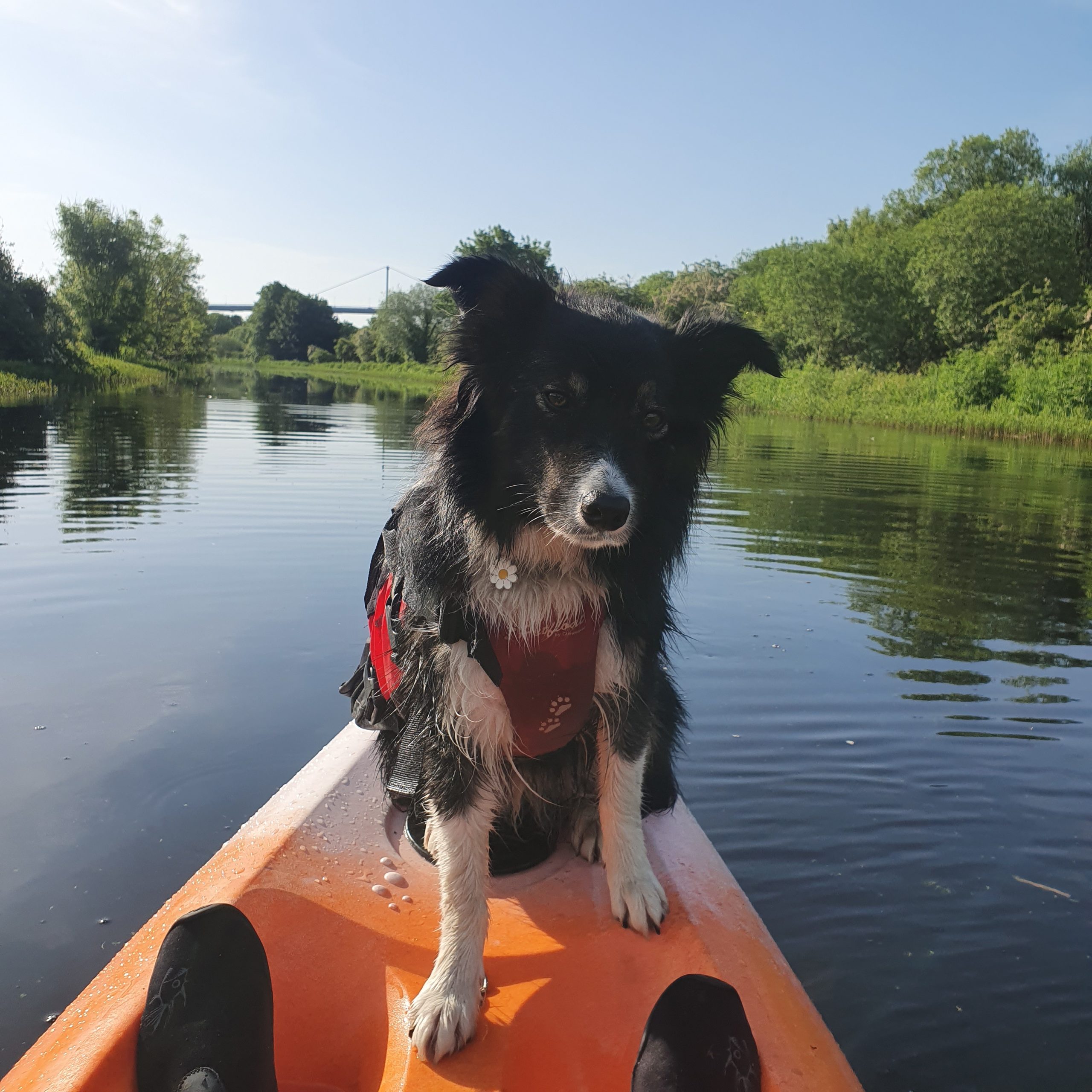
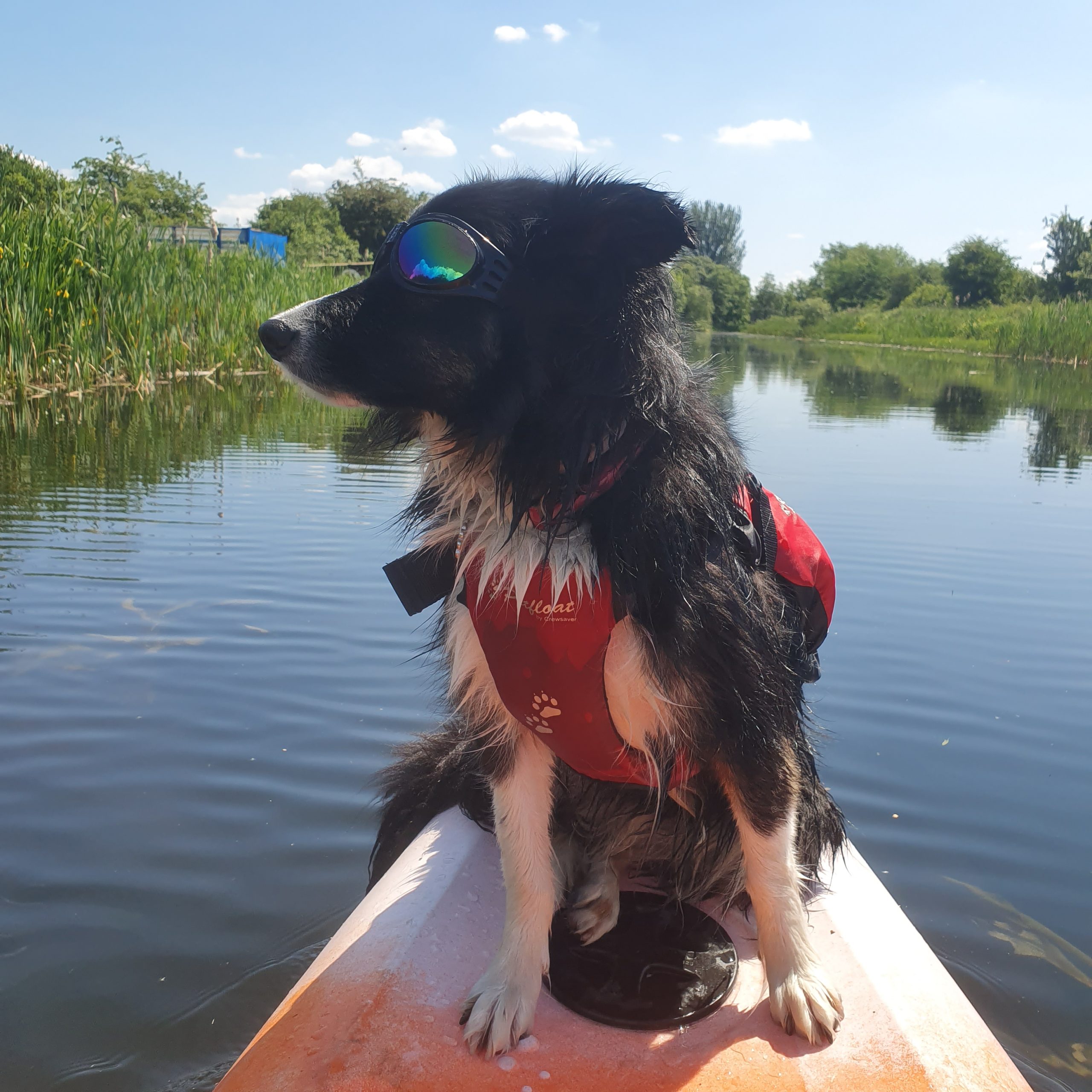
A well-fitted canine buoyancy aid does more than keep your dog afloat. It changes their position in the water, holding them level so their head stays clear and they can swim in a natural, efficient posture. That alone transforms the experience for a dog who’d otherwise be fighting to keep their nose up.
It also gives you a sturdy grab handle. If you need to lift your dog back onto a board or out of the water, that handle is worth its weight in gold. Trying to haul a soaking, frightened dog by the collar is unpleasant for both of you and risks hurting their neck.
Buy from a reputable source rather than the cheapest option you can find. Check the fit carefully around the chest and belly, make sure it doesn’t rub under the front legs, and inspect it regularly for wear, because salt water and winter conditions take a real toll on straps and buckles.
If your dog is unsure in water, please don’t throw them in to “see if they can do it.” That’s a fast way to create a lifelong fear, and I spend a lot of my time undoing exactly that.
We build confidence slowly instead. Calm shallow water where your dog can stand. Lots of encouragement. Short, positive sessions that finish while your dog is still enjoying it. Let them choose to go deeper in their own time. Little and often wins every time.
This is exactly the kind of thing we work on in our one to one training sessions, where I can read your individual dog and adjust as we go.
Scottish water is cold for most of the year, often in single figures even in summer. Cold water affects a dog’s swimming ability quickly, sapping strength and coordination. Keep swims short in cool conditions and dry your dog off properly afterwards.
Keep secondary drowning in mind too. If your dog has inhaled water, watch them over the following days for coughing, laboured breathing, lethargy or pale, blue-tinged gums, and ring your vet if anything seems off.
If you’re wondering whether your pup is a natural or needs a bit of support, I’d love to help you find out safely. Get in touch and we’ll build a session around your dog, at their pace, with their safety first. No assumptions, no winging it.