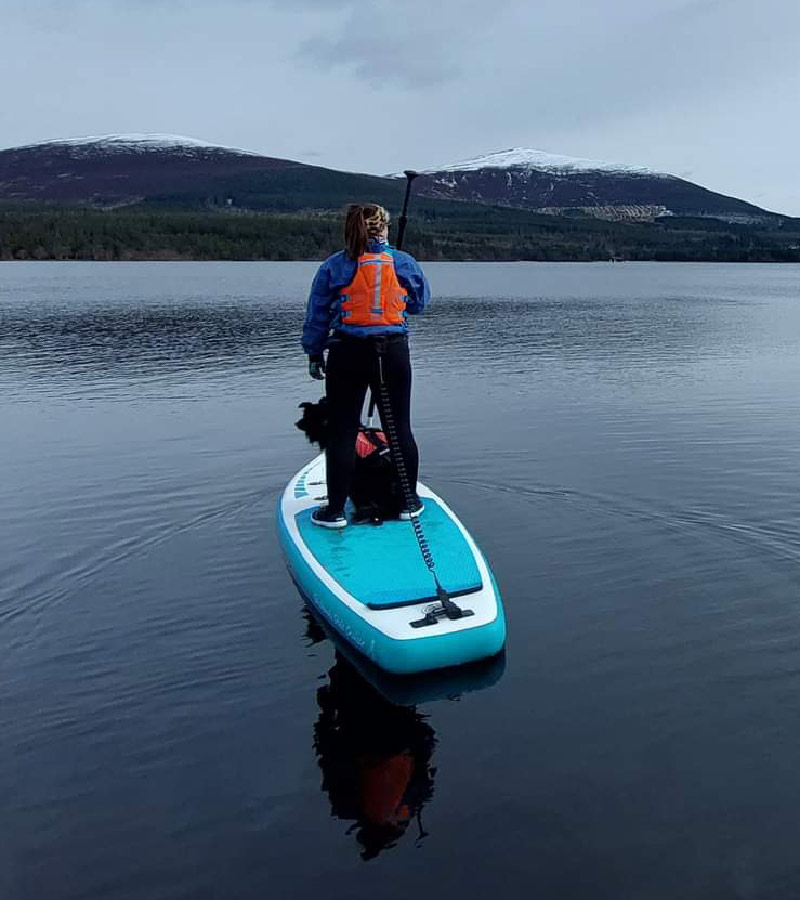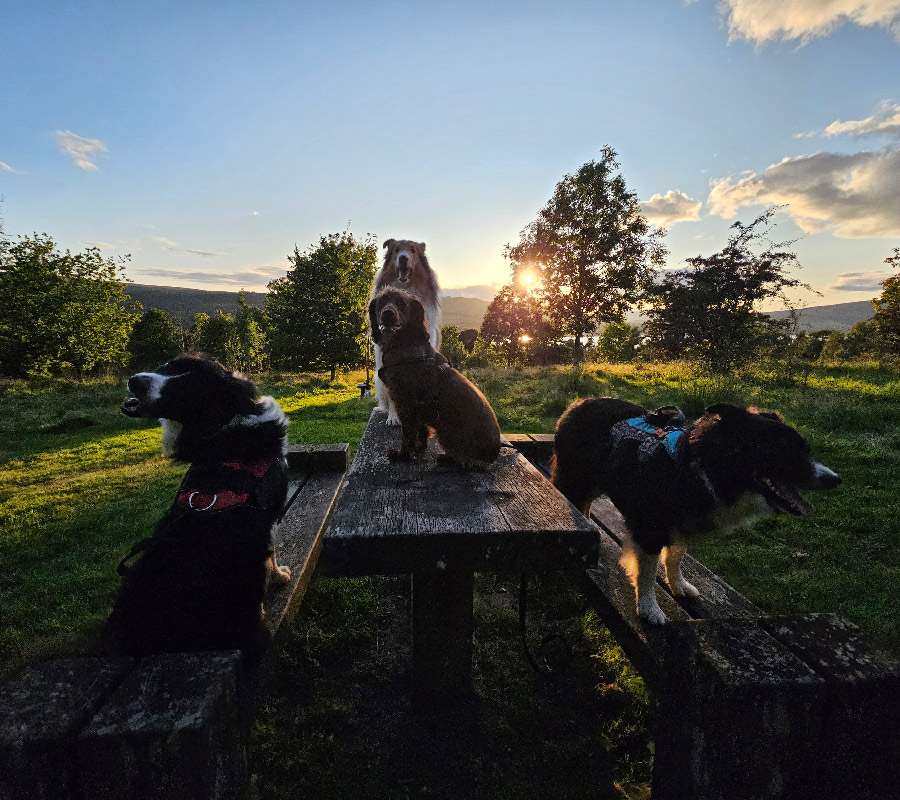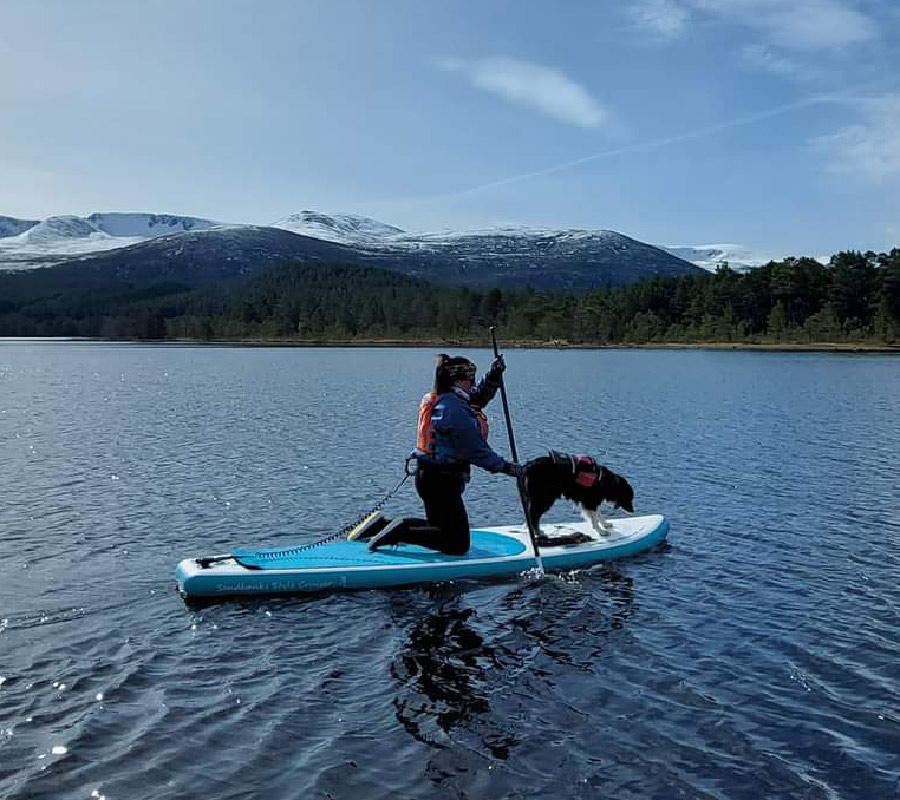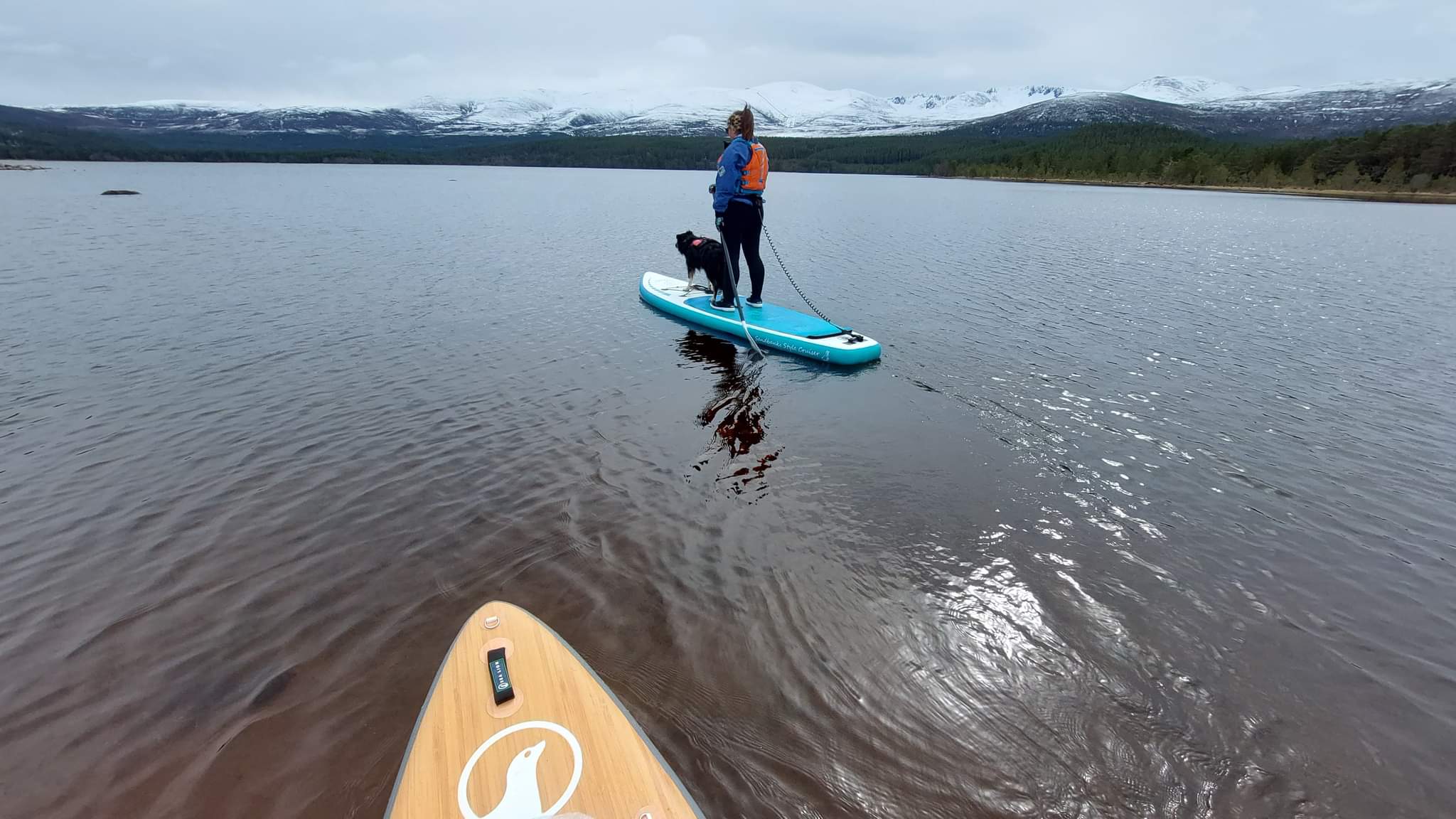
People often ask me how quickly they can get their dog out on a paddleboard. It’s a fair question, and I understand the excitement. But the honest answer is that the board is the easy bit. Good dog training is what makes the whole adventure safe, calm and genuinely enjoyable.
Everything I do is built on a simple idea: a well-trained dog is a happy, confident dog. And a confident dog is one you can actually relax with on the water.
So let’s talk about why the training comes first, and what it actually involves.
You can own the finest board in Scotland and the best buoyancy aid money can buy, but none of it helps if your dog panics, bolts or won’t listen when it counts. Dog training gives you the one thing kit can’t: a partner who trusts you and responds to you, even when a duck flaps past or the wind picks up.
I’ve watched people arrive waterside with thousands of pounds of equipment and no plan. It rarely ends well. Dogs biting inflatable hulls, dogs leaping off unexpectedly, owners shouting a recall cue that has never once worked around distractions. The kit wasn’t the problem.
That trust is the real goal. When your dog is calm and confident, you can be calm and confident too, and that’s when the adventures actually begin.
If I could give every dog owner just one gift, it would be a rock-solid recall. On the water it’s your lifeline, because we never paddle with a lead attached to the dog. A snagged lead in the water is genuinely dangerous. A reliable recall means your dog comes back to you every time, no lead required.
We drill recall on land, in the field, and around distractions long before we think about paddling. And we test it properly. A recall that works in your garden is a start, not a finished product. It needs to hold up when there’s a seagull, a swimmer and another dog all competing for your dog’s attention.
It’s a cornerstone of the R.A.F.T. framework, and it’s usually where our work together begins.
Beyond recall, we work on the quieter skills that make a difference. Settling on an unstable surface. Staying relaxed while things move underfoot. Waiting patiently while you sort the kit out. These are the muscles, both physical and mental, that keep a dog steady on a wobbling platform.
Time on wobble cushions, beached boards and soft sand builds real muscle conditioning. A dog who has never had to balance will tire quickly and get anxious. Little and often is the way, a few minutes at a time rather than long sessions.
Teaching your dog to wait, to settle on a mat, and to stay put until released pays off enormously. Most on-water problems are really impulse control problems that arrived at the worst possible moment.
If you’re local, our one to one training sessions let us tailor every exercise to your dog. We can work on exactly what your dog finds tricky, at a pace that suits them, without the pressure of a group.
Specialist canine paddlesports training isn’t available on every corner, so I also offer remote sessions over video. These are brilliant for building the land-based foundations, recall, confidence and stability work, from wherever you are in the country.
People are often surprised by how much we can achieve remotely. I can watch your dog’s body language on camera, spot the habits you’ve stopped noticing, and set you homework that actually moves things forward. Plenty of the groundwork happens long before anyone gets wet, so distance is no barrier to getting started. Many clients do a few remote sessions to build the basics, then come to us for the on-water work.
Some dogs and owners thrive in a group. Our group workshops are sociable, good value, and give you the chance to see other dogs working through the same challenges. They’re not right for every dog, particularly nervous or reactive ones, but for a sociable dog they’re great fun.
I’m a firm believer that if you fail to prepare, you prepare to fail. Dog training isn’t a box you tick once, it’s an ongoing conversation between you and your dog that keeps you both safe and sharp. Skills fade if you don’t practise them, and a recall you haven’t tested since last summer is not a recall you should be relying on.
The REACT approach keeps risk front of mind every single time you head out, whatever your dog’s experience level.
Whether you’re just starting out or want to sharpen up before summer, good dog training is where it begins. Explore our one to one training sessions, and get in touch whenever you’re ready. Tell me about your dog and we’ll build a plan around the pair of you.
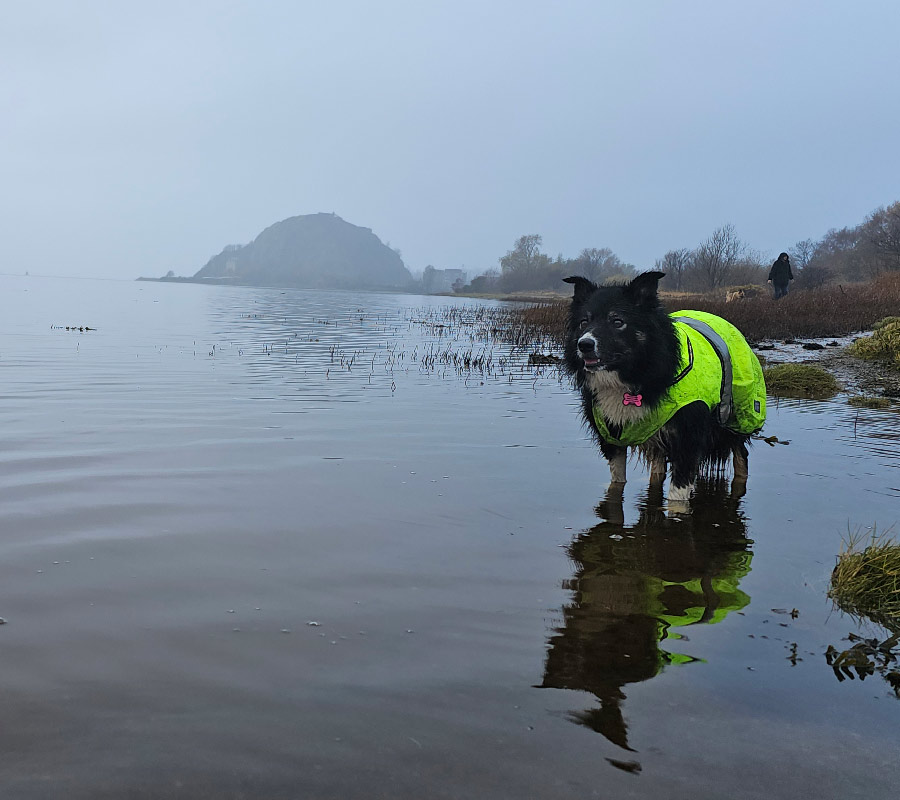
Remember how to REACT to reduce the risk to you and your dog around water